

Inter-Libyan Dialogue: International Praise for Morocco’s Role
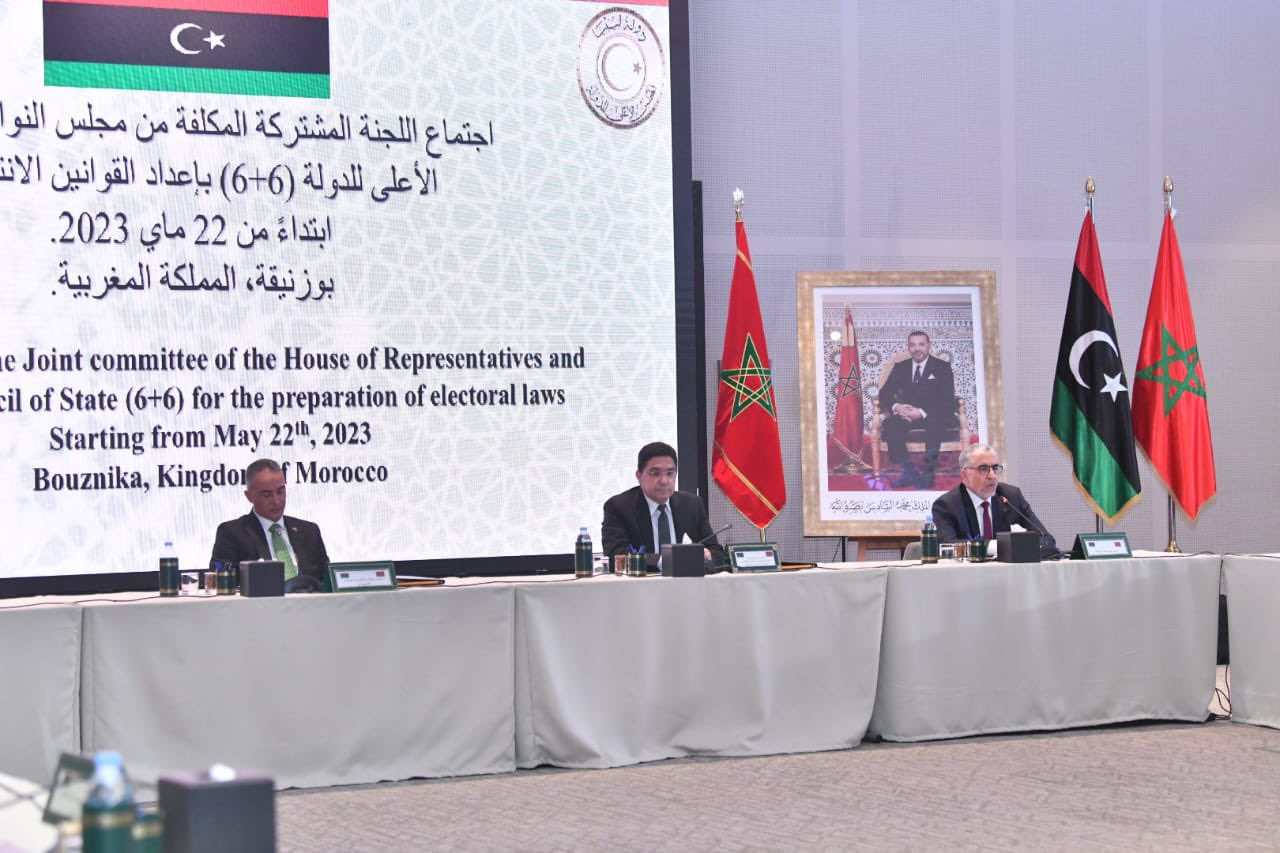
Rabat – The role played by Morocco in bringing the inter-Libyan dialogue to a successful conclusion, within the framework of the “6+6” Joint Commission, has been universally praised by regional and international organizations, the diplomatic corps of numerous nations, and numerous media outlets. They have praised the Kingdom’s active commitment to a political transition in this country through the electoral process.
Stéphane Dujarric, the spokesperson for the Secretary-General at the UN, thanked Morocco for helping the Libyan parties convening in Bouznika to reach an agreement on the electoral regulations.
At his daily news conference in New York, the spokesman emphasized, “We thank Morocco for facilitating the efforts” of the members of the “6+6” Joint Commission, who were tasked by the Libyan House of Representatives and Council of State with creating the electoral legislation.
The “6+6” Libyan Joint Commission meeting, which took place in Bouznika from May 22 to June 6, reached an agreement on the rules regulating the presidential and parliamentary elections planned for the end of the year, and the United Nations Support Mission in Libya (UNSMIL) congratulated Morocco for hosting it.
The Mission thanked Morocco for hosting the 6+6 Commission and conveyed its appreciation for their efforts in a statement.
The African Union (AU) congratulated Morocco in a similar manner. Chairman of the AU Commission Moussa Faki Mahamat tweeted, “I congratulate the Kingdom of Morocco on its facilitation.”
Ahmed Abou El Gheit, the secretary general of the League of Arab States, hailed Morocco’s initiatives and expressed the hope that they would “encourage the Libyan parties, following the compromises announced, to overcome the obstacles preventing the final signing of the agreement in the coming days.”
The General Secretariat of the Organization of Islamic Cooperation (OIC), in a similar vein, praised the Kingdom for its contribution to the achievement of these compromises.
The General Secretariat of the Arab Maghreb Union (AMU), which praised Morocco’s efforts on behalf of the Libyan brothers as well as the strategy used by the Kingdom to give them the proper space for consultation and dialogue “far from any foreign pressure,” expressed the same degree of satisfaction.
The “6+6” Joint Commission’s compromise on the laws governing the election of the Head of State and members of Parliament was welcomed by the Ministerial Council of the Cooperation Council for the Arab States of the Gulf (GCC), who described it as a “positive and constructive” step toward the holding of presidential and parliamentary elections in the nation.
Several diplomatic missions accredited to Morocco hailed the country for their dedication as well. The British and Irish embassies expressed their appreciation for the Kingdom’s hosting of the “6+6” Joint Commission in tweets. They also praised the diplomatic efforts of Morocco for their part in settling this dispute.
The Croatian embassy, for its part, welcomed Morocco’s initiatives to support the “6+6” Joint Commission dialogue and find a solution in the hopes of resolving the political crisis in Libya, highlighting “the Kingdom’s strong and positive commitment to a peaceful political transition in Libya, through the electoral process.”
The embassies of Switzerland and the Netherlands in Rabat also praised Morocco’s “very positive” support for the orderly political transition in Libya in tweets.
Saudi Arabia praised “the efforts of the brotherly Kingdom of Morocco to make the dialogue succeed and reach a compromise, with a view to achieving a political settlement in Libya”. The Saudi Ministry of Foreign Affairs published the statement.
Iraq highly praised Morocco’s efforts in facilitating a productive debate and reaching a settlement about the electoral law in Libya while giving political parties the chance to play a significant role in the electoral process.
The Mauritanian government applauded the “great efforts made by the Kingdom to reconcile the views of the various Libyan parties in order to reach this important agreement, which paves the way for the establishment of the necessary conditions for the completion of the Libyan electoral process in the best circumstances and in a consensual and participatory manner,” through its Ministry of Foreign Affairs.
Egypt likewise lauded the efforts of the “6+6” Joint Commission in a statement released by the Ministry of Foreign Affairs, praising the Kingdom for hosting the commission’s activities.
The UAE Ministry of Foreign Affairs praised “the efforts of the brotherly Kingdom of Morocco to make the dialogue a success and reach important compromises aimed at achieving a political settlement in Libya” in a statement that was similar to that of the Moroccan government.
Kuwait also commended Morocco for its efforts in hosting the “6+6” Joint Commission meeting at Bouznika.
Jordan praised the Kingdom of Morocco for its contribution to the successful negotiation and compromise between the Libyan parties over the scheduling of the presidential and parliamentary elections.
The “6+6” Joint Commission, which was tasked by the Libyan House of Representatives and High Council of State with establishing the legislation governing presidential and legislative elections in Libya, came to an agreement in the Moroccan city of Bouznika, which was warmly welcomed by the Jordanian Ministry of Foreign Affairs.
The same was true for Yemen, where the Ministry of Foreign Affairs applauded the compromises made by the “6+6” Joint Commission following two weeks of discussions in Morocco regarding the rules governing the presidential and parliamentary elections planned for the end of the year.
The “6+6” Joint Commission was tasked by the Libyan House of Representatives and Council of State with drafting laws governing the presidential and parliamentary elections scheduled for the end of the current year. After roughly two weeks of meetings in Bouznika, the members of the Joint Commission came to a significant consensus, which was praised by the Kingdom of Bahrain.
Through its Ministry of Foreign Affairs, the State of Qatar thanked Morocco on Sunday for helping to facilitate communication and consultation between the Libyan parties and for its efforts in hosting the negotiations.
Additionally, a number of international media outlets emphasized the significance of Morocco’s contribution to the Libyan conversation. These included the Italian media, who deemed this action “crucial” in the endeavor to end the Libyan crisis, and the Argentine news outlet Alternate Press Agency, which lauded the Kingdom’s tenacious efforts in an analysis by Argentine political analyst Adalberto Agozina.
The “6+6” Joint Commission declared on Tuesday night that its members had reached an agreement on the legislation governing the presidential and parliamentary elections slated for the end of the year following two weeks of negotiations in Morocco.
The Bouznika meeting is a continuation of the series of meetings hosted by the Kingdom, bringing together the various Libyan parties with a view to deepening dialogue on ways and means of resolving the crisis in the country, following an approach that provides the right platform for constructive dialogue and consultation.
Read Also: Libyan “6+6” Commission’s Meeting in Bouznika: African Union Congratulates Morocco