

Croatia adopts euro, enters borderless Europe club
After joining the European Union over ten years ago, Croatia achieved two significant milestones on Sunday: switching to the euro and entering the passport-free zone of Europe.
The country from the Balkans said goodbye to its kuna currency at midnight and joined the eurozone as its twentieth member.
It is currently the 27th country in the biggest passport-free region in the world, known as Schengen, which allows more than 400 million people to travel freely inside its borders.
“It is the season of new beginnings. And there is no place in Europe where this is more true than here in Croatia,” tweeted EU chief Ursula von der Leyen, as she arrived in Croatia to mark the occasion.
At a border crossing with EU member Slovenia, she planned to see Croatian Prime Minister Andrej Plenkovic and Slovenian President Natasa Pirc Musar before continuing on to Zagreb.
According to experts, the adoption of the euro will protect Croatia’s economy at a time when global inflation is on the rise as a result of Russia’s invasion of Ukraine, which drove up the cost of food and gasoline.
However, opinions vary among Croatians.
Some people worry that the changeover to the euro would increase the cost of living since firms round prices when they convert them, even while they applaud the abolition of border restrictions.
“It will be difficult. Prices that are already high will become even higher,” said Ivana Toncic, a teacher from Zagreb.
But tourist agency employee Marko Pavic said Croatia was joining “an elite club.”
“The euro was already a value measure — psychologically it’s nothing new — while entry into Schengen is fantastic news for tourism,” he said
In Croatia, the euro is already widely used.
Croatians have traditionally valued their most valuable possessions in euros, such as their automobiles and residences, demonstrating a lack of faith in the national currency.
Euros make up around 80% of bank deposits, and the eurozone comprises the majority of Zagreb’s commercial partners.
Officials have justified the decision, claiming that the country has now fully integrated into the EU as a result of joining the eurozone and Schengen.
Croatia, a 3.9 million-person former Yugoslav country that waged an independence war in the 1990s, ascended to membership in the European Union in 2013.
According to experts, the introduction of the euro will make it easier to borrow money during a recession.
In November, Croatia’s inflation rate was 13.5 percent compared to the eurozone’s 10 percent.
Analysts emphasize that countries in the east of the EU, like Poland or Hungary, that use currencies that are not part of the eurozone have been considerably more sensitive to rising inflation.
Emmanuel Macron, the president of France, praised Croatia’s decision to adopt the euro on Sunday, calling it a “reliable and sturdy” currency that has helped Europe weather the effects of the conflict in Ukraine.
Boris Vujcic, the governor of the Croatian National Bank, symbolically withdrew euros from a cash machine in the heart of Zagreb earlier on Sunday.
Customers have been waiting in line at banks and ATMs recently to withdraw cash out of concern about payment issues during the transition period’s immediate aftermath.
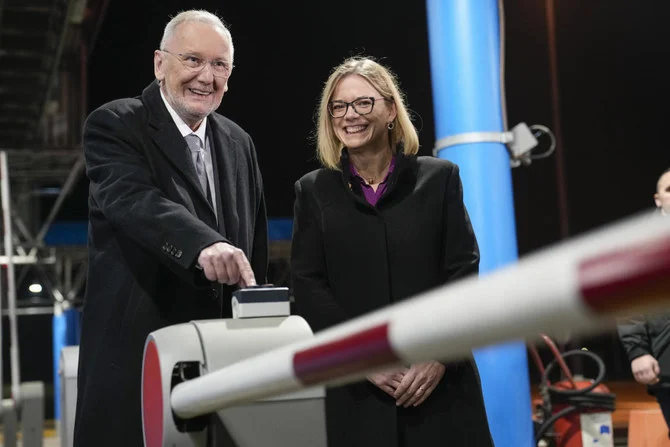
In order to represent barrier-free travel, a number of activities were organized when the clock struck midnight around Croatia’s borders with its EU neighbors.
The New Year’s countdown culminated with the raising of a traffic barrier at a crossing point with EU member Hungary, and foreign minister Gordan Grlic-Radman participated in the event there.
At the Slovenian border, a similar ceremony was performed with the ministers of the interior, Davor Bozinovic, and the public administration, Sanja Ajanovic Hovnik.
“Tonight we are celebrating New Year, new Europe with Croatia in Schengen,” Bozinovic told reporters.
The vital tourist sector, which contributes 20% of Croatia’s GDP, is anticipated to grow as a result of the country’s membership into the Schengen borderless region.
The 73 land border crossings with Slovenia and Hungary will no longer have the lengthy lines they formerly had.
However, due to technological difficulties, border inspections at airports won’t stop until March 26.
Additionally, Croatia will continue to maintain strong border controls along its eastern border with its non-EU neighbors Bosnia, Montenegro, and Serbia.
The biggest obstacle in securing the 1,350 km long external land border of the European Union continues to be the fight against illegal immigration.