



By Berrak Chadi Abdesslam
Table Of Content
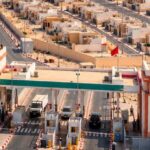
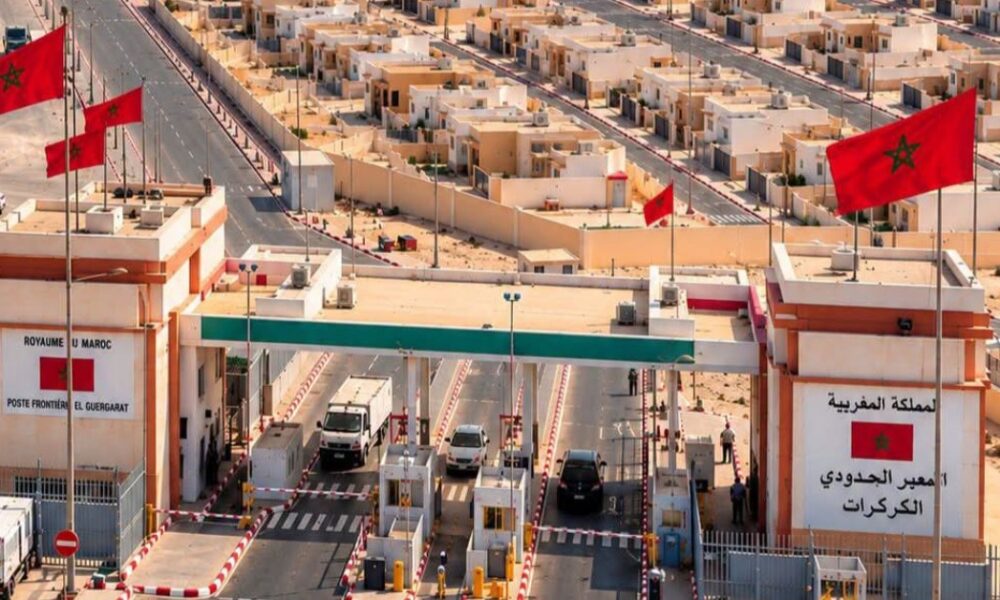
Six years after the November 13, 2020 operation at the Guerguerat border crossing—a strategic outpost in the far southwest of the Moroccan Sahara bordering Mauritania that serves as the sole overland gateway connecting North Africa to sub-Saharan markets—Morocco’s strategic and military doctrine has fundamentally reshaped geopolitical dynamics across North and West Africa. Executed with calculated restraint and precision under the leadership of King Mohammed VI, Supreme Commander and Chief of General Staff of the Royal Armed Forces (FAR), the operation thwarted attempts by Polisario militias to provoke Rabat into an open, close-quarters military confrontation. Instead, Morocco decisively secured this vital commercial corridor linking European markets to West Africa, establishing clear rules of engagement to safeguard its national security and territorial integrity from Tangier to Lagouira.
Historical Continuity and Military Doctrine
Understanding Morocco’s resolute posture requires examining its centuries-old continuity as a sovereign nation-state. Throughout history, the cohesion between the Moroccan people and the Alaouite monarchy—acting as the nation’s sole legitimate and historical leadership—has served as the primary bulwark against external destabilization and separatist agendas.
This strategic resilience was forged during the Sahara conflict (1976–1991), when Rabat pursued a dual-track doctrine: repelling guerrilla warfare backed by regional adversaries while simultaneously investing in the development of its southern provinces. Far from a tactical retreat, the creation of a buffer zone east of the Moroccan Security Wall was a deliberate military calculation. Backed by advanced surveillance technology and air superiority, the Sand Wall neutralized hit-and-run incursions, protected civilian hubs, and ultimately compelled the Polisario to accept the 1991 UN-brokered ceasefire, which strictly prohibited armed entry into the zone.

A Diplomacy of Clarity and the Atlantic Vision
Building on the 2016 security sweep of the “Kandahar” strip—an informal, lawless stretch adjacent to the Mauritanian border near Guerguerat—and the 2020 securing of the crossing itself, Rabat has pivoted from crisis management to proactive regional integration. Through South-South cooperation and flagship infrastructure projects like the Nigeria-Morocco Gas Pipeline and the Atlantic African States Process, Morocco has transformed its southern provinces into a premier continental logistics hub. As King Mohammed VI emphasized during the 48th anniversary of the Green March in November 2023, Rabat’s overarching objective is to transform the Atlantic facade into a space of human connectivity, economic integration, and international projection.
On the diplomatic front, Morocco has brought an end to strategic ambiguity. In accordance with royal directives, the Sahara issue now serves as the definitive benchmark by which Rabat evaluates its bilateral partnerships. Diplomatic “gray zones” are no longer tolerated—a shift underscored by the growing momentum of “consulate diplomacy” in Laayoune and Dakhla, supported by a unified domestic front.
From Resolution 2797 to Security Council Deadlock
This ground-level and diplomatic momentum culminated at the United Nations with the adoption of Security Council Resolution 2797 on October 31, 2025. Passed with 11 votes in favor and zero against, the resolution enshrined Morocco’s 2007 Autonomy Plan as the sole realistic and credible framework for a political settlement, effectively shelving obsolete proposals.
The shifting balance of power cornered Rabat’s adversaries, precipitating an unprecedented diplomatic showdown at the Security Council on October 30, 2026. During that session, Russia wielded its veto to block a U.S.-drafted resolution—backed by 11 council members—that sought to align the UN mission’s mandate and name with the Autonomy Plan while mandating a census of the Tindouf camps. In turn, the United States vetoed an alternative Russian draft proposing a mere technical rollover that ignored the new political realities, a text that garnered only three votes. While this mutual veto left MINURSO’s mandate unrenewed and exposed deep great-power rivalries, it confirmed that any future UN track must reckon with the irreversible reality of Moroccan sovereignty.
A Continuum of National Triumphs and Regional Peace
Ultimately, the Guerguerat operation was not an isolated military maneuver, but a link in a continuous historical chain of Moroccan statecraft. From the historic Battle of Wadi al-Makhazin, which safeguarded national sovereignty and altered international balances of power, to the peaceful ingenuity of the 1975 Green March, Morocco has consistently paired military firmness with strategic foresight.
Today, Rabat’s vision extends beyond security toward comprehensive development. Far from being a “no man’s land” as adversary propaganda claims, the vast territories east of the Security Wall are slated for structured infrastructure, road networks, and energy projects that will fully integrate them into the southern provinces’ economic expansion.
Yet, alongside this unwavering resolve in defending its territorial integrity, the Kingdom of Morocco remains firmly committed to comprehensive regional peace, championing constructive dialogue, good neighborliness, and shared economic integration as the only viable path toward collective prosperity for the peoples of the Maghreb and the Sahel. The strength Morocco projects on the ground and on the diplomatic stage remains fundamentally dedicated to peace, stability, and development—anchored by historical legitimacy and an unshakable national consensus.