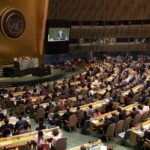

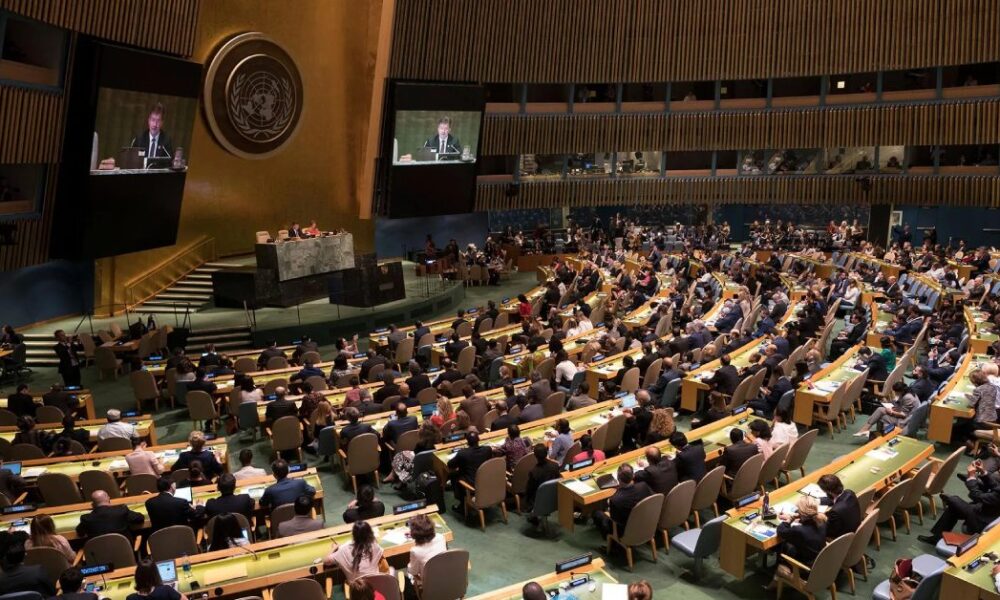
African countries on Wednesday reaffirmed their support for Morocco’s Autonomy Initiative and the Kingdom’s sovereignty over its Sahara, before the United Nations General Assembly, as the debate launched on Tuesday continued over Russia’s veto at the Security Council.
The plenary meeting, convened pursuant to General Assembly resolution 76/262, is devoted to Russia’s veto on October 30, 2026, against the US-drafted resolution on the Sahara issue, which had received 11 favorable votes out of 15 and would have extended the mandate of MINURSO.
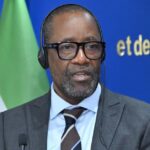
Speaking on the occasion, the representative of the Republic of Djibouti reaffirmed his country’s support for “the Moroccan Autonomy Initiative within the framework of the sovereignty of the Kingdom of Morocco, which it considers the only political solution capable of leading to a just, lasting and mutually acceptable settlement of this dispute.”
The diplomat recalled “the relevance of Security Council resolution 2797, which established the Moroccan autonomy proposal as the basis for negotiations.”
He also highlighted the “encouraging developments” reported by the Secretary-General in his latest report, particularly the resumption of substantive discussions among the four parties around this proposal, following several years of hiatus.
“The path of dialogue and negotiation, based on the Moroccan Autonomy Initiative, provides the appropriate framework for achieving a definitive, just and lasting political settlement of this issue,” he stressed.
For its part, the Republic of Guinea reiterated “its commitment to the Moroccan Autonomy Initiative as the sole serious, credible and realistic basis offering concrete guarantees of a political settlement, while respecting the sovereignty and territorial integrity of the Kingdom of Morocco.”
The Guinean representative stressed that his country supports the relevant Security Council resolutions, “particularly resolution 2797 (2025), which establishes the framework for a definitive settlement based on the autonomy plan under Moroccan sovereignty.”
“The status quo, let alone the impasse,” he said, “cannot constitute an acceptable prospect for the United Nations after several decades of diplomatic efforts.” The diplomat called on the international community to renew its commitment to “definitively turn the page on this dispute through compromise, realism and pragmatism.”
Togo, for its part, reiterated its “full support for the Kingdom of Morocco in its continued efforts to achieve a just, lasting and mutually acceptable political solution” to this dispute, which has persisted for more than half a century and, in its view, deprived the African continent of significant development opportunities.
“Togo is convinced that the Moroccan Autonomy Initiative, presented to the Secretary-General on April 11, 2007, constitutes the most credible, realistic and pragmatic basis for achieving a definitive political settlement,” the Togolese representative said, adding that this conviction had been “further reinforced by resolution 2797,” adopted on October 31, 2025.
The diplomat also commended Morocco’s respect for the ceasefire and its continued cooperation with MINURSO, before reaffirming his country’s commitment to a definitive solution to the Sahara issue “in respect of the sovereignty and territorial integrity of the Kingdom of Morocco.”
On the other hand, the Togolese representative called for the registration of the populations in the Tindouf camps.
Liberia reiterated its support for the Moroccan Autonomy Initiative “as the most realistic, credible and feasible basis for a negotiated settlement under Moroccan sovereignty.”
Speaking on this occasion, the Liberian representative, whose country voted in favor of the US-drafted resolution on October 30, stressed that the text “provided clear political direction while maintaining the UN’s engagement.” He argued, by contrast, that the draft resolution submitted by Russia lacked political clarity.
The Togolese diplomat also commended “Morocco’s sustained diplomatic efforts” and its commitment to restraint and the safety of UN personnel.
Senegal likewise maintained that “the autonomy plan offers the guarantees of a peaceful, lasting and development-oriented solution,” while expressing regret over the use of the veto, which prevented the Security Council from taking a decision on the renewal of MINURSO’s mandate.
These positions add to those expressed on Tuesday by the overwhelming majority of African countries, which had reiterated their support for the Moroccan Autonomy Initiative under Moroccan sovereignty.
From West Africa to the Horn of Africa and across the Indian Ocean region, African delegations thus expressed, in convergent terms, their support for the autonomy plan as the basis for a definitive settlement of this regional dispute, underscoring the continent-wide support for Morocco’s sovereignty over its Sahara.
- Source: MAP