





 Rami El Manar Esslimi
 By Rami El Manar Esslimi
Table Of Content
- Cloning the “Monroe Doctrine”
- Supporting Separatists and Terrorist Groups in North Africa and the Sahel
- Mali’s Decision to Back the Moroccan Autonomy Plan and the Algerian Decision to Topple the Malian Government
- The Attack on the Malian State
- The Attack on Mali Is a Direct Threat to Morocco’s National Security
- Risks That Must Be Paid Attention To
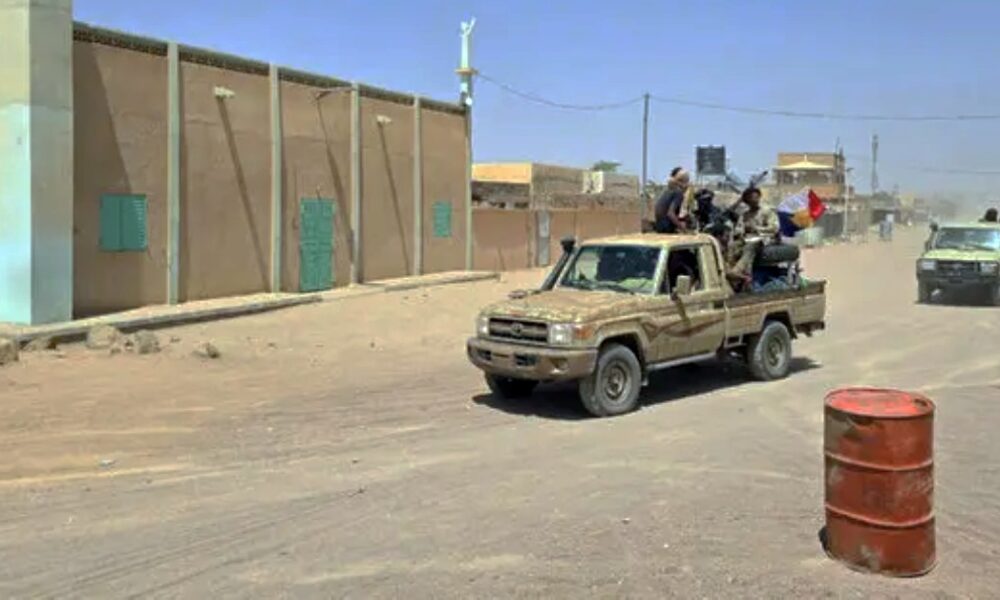
Two weeks after Mali’s decision to withdraw its recognition of the POLISARIO Front, the country was subjected to a large-scale attack launched by the Azawad Liberation Front (FLA) and the Group for the Support of Islam and Muslims (JNIM). The attack, launched at dawn on the 25th of April, led to the fall of many cities and barracks into the hands of the two armed groups; moreover, the main military bases protecting the capital city of Bamako are being targeted, indicating that the principal objective of this surprise attack is to topple the Malian government. Many indicators point to the possibility that the training, planning, logistics, and support behind this attack were provided by the Algerian government.
Cloning the “Monroe Doctrine”
Since the end of the Black Decade, the Algerian state has been spreading a narrative in which it claims to be the only available gateway to the Sahel, the guardian of stability in the region, and the bulwark preventing Sahelian terrorist groups from reaching European shores. This narrative was accepted by the West for many years, until the moment of the creation of the Sahel Alliance between Mali, Niger, and Burkina Faso — an alliance perceived by Algeria as a threat to its hegemonic role over the Sahel.
Thus, Algeria began developing a new destabilization plan to dissolve this alliance, first by establishing binding agreements with Niger, especially in the economic and energy sectors. Algeria also worked to secure a neutral stance from Burkina Faso, instead of having it follow the Malian position which regarded Algeria as a threat to Mali’s borders, stability, and security. This allowed Algeria to theoretically freeze the Sahel Alliance, especially by fueling the disagreements that have existed between Mali and Niger since day one. Algeria also worked to eliminate any possibility of Chad joining this alliance, in order to limit the influence and strength of the new coalition.
Supporting Separatists and Terrorist Groups in North Africa and the Sahel
Malian-Algerian diplomatic relations have deteriorated to such worrying levels that Mali has, on various international occasions, officially accused the Algerian state of attempting to destabilize the country and of backing terrorist groups in the Sahel. This is confirmed by the WikiLeaks files, which revealed Algeria’s contacts with Mokhtar Belmokhtar; moreover, some files clearly show that Algeria was guiding the brigade led by Belmokhtar to attack neighboring countries, including Sahel states and Morocco. Algeria is also unofficially detaining the family and offspring of Iyad Ag Ghali — the official leader of JNIM — in the Algerian town of Tin Zaouatine, near the Malian border.
Algeria has also been accused by the Malian government of hosting and protecting terrorist groups within its borders, shielding them from any retaliatory attack launched by the FAMa (Malian Armed Forces). This was illustrated by the Algerian downing of a Malian drone conducting a surveillance flight over northern Mali — an attempt to keep the positions held by insurgents and terrorists in the north hidden from the sight of Malian forces.
Furthermore, the FLA — which is today leading the offensive against Mali — was suddenly established under suspicious and shallow circumstances in 2024, one year after the founding of the Sahel Alliance. This group is considered by the Malian authorities to be an Algerian “creation,” set up in response to the Sahel state coalition, which Algeria viewed as a threat to its hegemonic position in the region. It was also driven by Algeria’s reaction to Mali’s decision to withdraw from the 2015 Algiers Accords, which had previously guaranteed direct Algerian involvement in Malian state affairs and decision-making processes. Malian-Algerian relations deteriorated further after Algerian demands to create a buffer zone along Mali’s northern border (southern Algeria) and to establish a demilitarized zone inside Mali. These demands and actions reflect the “Monroe Doctrine” followed by Algeria, in which it views the Sahel as its “backyard” — a doctrine rejected by Mali and considered an infringement of its sovereignty and rights.

Mali’s Decision to Back the Moroccan Autonomy Plan and the Algerian Decision to Topple the Malian Government
Algeria considered Mali’s decision to back the Moroccan autonomy plan a direct blow and an action threatening its security. This diplomatic move — which Algeria had likely known about a few months before its official announcement (similar to France’s official backing of the Moroccan autonomy plan) — explains many of the Algerian maneuvers and diplomatic mobilization carried out in recent months, up until the 24th of April 2026 (one day before “D-day”).
Algeria began its maneuvering by first securing Niger as a solid ally, pumping millions of dollars into its market with a major focus on Niger’s energy infrastructure. In addition, Algeria emphasized — on multiple occasions and in official meetings between Algerian and Nigerien officials — the Nigeria-Algeria gas pipeline crossing Nigerien territory, presenting it as the main connecting ground between the two states. This was seen as an attempt to undermine the Morocco-Nigeria gas pipeline (Gazoduc) project, which rivals the Algerian one, runs along the West African coast, and reaches European markets via Spain. The Algerian strategy aimed to secure Niger and isolate Malian-Algerian tensions as a unique case in the Sahel.
Algeria also secured a set of military agreements with Mauritania, demonstrating its willingness to stand with Mauritania against Mali in case of any military escalation between the two neighboring countries. This further helped to isolate the tensions from the west. Algeria also received the Mauritanian Prime Minister in Algiers in order to secure Mauritanian neutrality through the energy card played by the Algerian regime; this came as a preemptive maneuver to prevent any “spillover” to Mauritania of the recent wave of support Morocco has been receiving for its autonomy plan, or any withdrawal of recognition by the Mauritanian government from the POLISARIO Front.
It was also noted that, before the outbreak of the armed attack on Mali by the militias in the north, the last move was President Tebboune’s reception of the Chadian president in Algeria — Chad being the most important country in the Sahel — in order to reinforce the Algerian narrative regarding its capabilities and dominant position over the region. In this meeting, the Algerian president proposed a plan similar to the Atlantic Initiative announced by Morocco, which reflects the Algerian regime’s confidence in its destabilization plan in the Sahel and its attempt to interrupt the Moroccan initiative and disrupt its processes.
Simultaneously with the planning of the attack on Mali, Algerian officials held a summit with Russian officials — publicly framed as concerning the Moroccan Sahara — but one wonders whether it was in fact a summit at which a Russian-Algerian agreement on Mali was sealed.
The Attack on the Malian State
Following all these Algerian maneuvers and preparations, the attack was launched at dawn on Saturday, the 25th of April 2026. It allowed JNIM terrorists and FLA militias to seize numerous cities and military checkpoints, including such vital locations as Kidal, Gao, and Sévaré. It is obvious that these militias are heading towards the capital city in order to topple the government, while the Africa Corps (formerly known as Wagner) retreated on the morning of the attack, before the exchange of fire between the Malian army and the assaulting militias began. It is clear that this scenario and attack were planned within the Algerian General Staff command, and the scenario itself recalls the 2014 events in which ISIS took control of parts of the Levantine and Iraqi border areas and announced the establishment of the Caliphate. This raises many questions as to whether we are witnessing the creation of the nucleus of a state in which Algeria gathers terrorist groups and separatist militias on Malian soil.
The Attack on Mali Is a Direct Threat to Morocco’s National Security
This dangerous Algerian maneuver in Mali can be regarded as a rearrangement of the political cards and positions in the Sahel region. It poses a direct threat to Moroccan national security, and to one of Morocco’s most important allies in the region — Mali — which is now considered the “new” gateway through which Morocco accesses West Africa, following the cooling that has come to characterize diplomatic relations between Morocco and Senegal after the breach Algeria made by establishing closer and more stable relations with Senegal — the country upon which Morocco had previously built its African policies.
This means that the Algerian maneuver aimed at destabilizing the Sahel constitutes a direct threat to Morocco and its interests in the region and across the continent. Morocco today faces two options: either back Mali and provide support — as it did in the past with Zaire (DRC) — in order to “save” the government and stabilize the region; or face the consequences of non-intervention in this conflict, which would allow Algeria to prepare a new plan to destabilize Mauritania.
These shocking and “invasive” tactics that Algeria has been pursuing in the region came after a joint call between Algeria and the U.S. in which both countries discussed multiple matters, including the Malian file. Algeria is also awaiting an official visit by the U.S. Deputy Secretary of State, which reflects the belief Algeria has adopted today regarding the U.S. as a country preoccupied with the Iranian nuclear file — a belief that has pushed the Algerian regime to ignite a new front of tension in the Sahel region and the wider North African environment. It remains unknown how AFRICOM will react to these new destabilizing policies that Algeria has decided to adopt and apply in the region.
Risks That Must Be Paid Attention To
The success of this maneuver in Mali would heighten the threat and danger along the Sahel-Algeria-Morocco corridor, since if the FLA and JNIM manage to take control of Mali, this would lead to the creation of an African strategic depth of 1.5 million [square kilometers] in favor of the POLISARIO Front. It would also provide POLISARIO with a rear base where it could train and arm itself away from Algerian territory, thereby allowing Algeria to further entrench its narrative that it is neither a party to nor a direct opponent of Morocco in the Moroccan Sahara conflict. The success of this attack on Mali would allow Algeria to create a black hole in the region, granting POLISARIO a larger margin of maneuver. Furthermore, Algeria could relocate the Tindouf camps towards northern Mali; beyond that, it would enable POLISARIO to launch attacks from Mali against Mauritania, reaching as far as Morocco’s southern borders.
The Algerian regime opted for this attack on Mali when it sensed that its former margins of political and military maneuver in the buffer zone were shrinking, and that launching POLISARIO attacks directly from Algerian borders was becoming untenable (including the military parade POLISARIO conducted in Tindouf on Algerian territory on the anniversary of the front’s creation), as such moves would in the future entangle Algeria in accusations of backing a terrorist group against a neighboring country. These maneuvers recall the 1970s and 1980s, when Algeria and POLISARIO decided to set up military camps in northern Mali in order to hide and secure the new SAM batteries that had been acquired for POLISARIO, before they were destroyed in a retaliatory attack by Moroccan forces.