





 America's oldest unbroken friendship wasn't with a European power. It was with Morocco.
 On January 6, 2026, the U.S. Congress gathered senators, military officials, and diplomats in the Kennedy Caucus Room to honor America’s oldest unbroken diplomatic friendship — with Morocco. As the United States approaches its 250th anniversary, one question many Americans and Moroccans alike have never been taught deserves a real answer: Why did Morocco recognize America first?
The archives are clear. It was not sentiment. It was sovereign strategy.
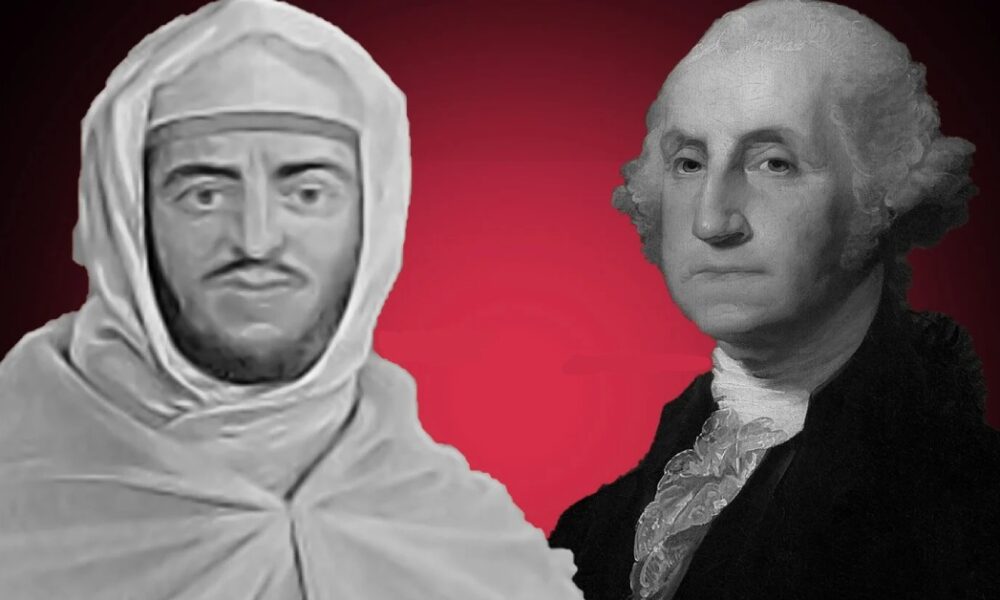
On December 20, 1777 — eighteen months into the Revolutionary War — Sultan Sidi Mohammed Ben Abdallah announced that all vessels sailing under the American flag could freely enter Moroccan ports, on equal footing with all nations that had treaties with Morocco. No European power had moved. Morocco acted alone.
A Sultan Who Designed His Kingdom for the Atlantic
The U.S. Embassy in Rabat’s own historical record is direct: the Sultan’s overture was rooted in his recognition of the need to establish peaceful relations with Christian powers and his desire to establish trade as a basic source of revenue. Instead of relying on a standing army to collect taxes, he wanted to establish state-controlled maritime trade as a new, more reliable source of income.
This was architecture, not impulse. Mohammed III had already signed commercial treaties with Denmark (1757), England (1760), Venice (1765), Spain (1767), and the Netherlands (1777). America was next in a deliberate Atlantic program.
When the Americans failed to respond, he issued a second declaration in February 1778. He waited nine years. When U.S. envoy Thomas Barclay finally arrived in Marrakech in June 1786, the treaty was sealed in nine days.
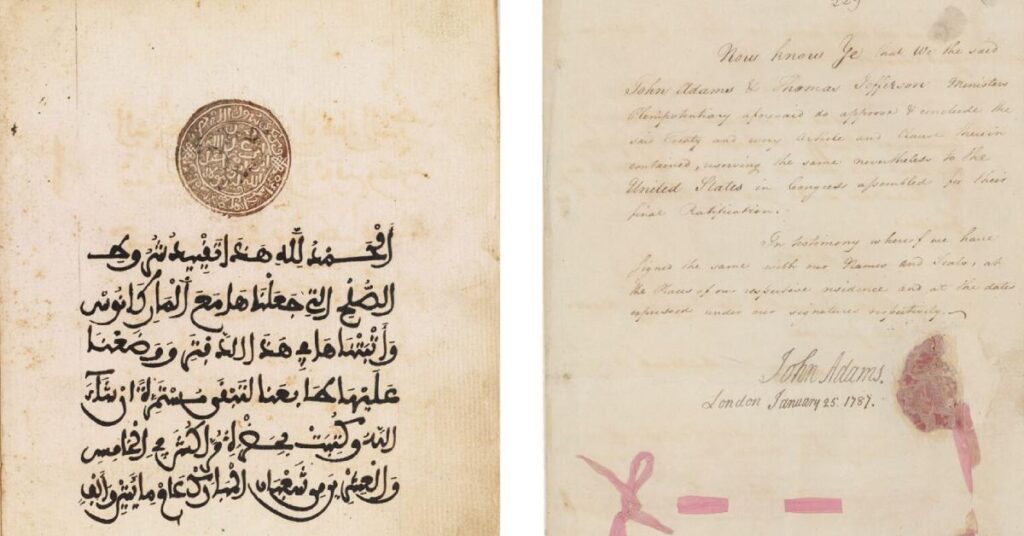
The Treaty That Came Before the Constitution
The Treaty of Peace and Friendship, signed by John Adams and Thomas Jefferson in 1786 and jointly ratified in 1787 — two months before the U.S. Constitution — remains America’s longest-standing formal agreement with another country.
Under Mohammed III, Morocco became simultaneously the first Arab, the first African, and the first Muslim state to formally recognize the United States.
The founding friendship was never accidental. It was built — deliberately, patiently — by a ruler who decided, decades before 1777, that Morocco’s future ran through the Atlantic.
- Sources: U.S. Embassy Morocco (ma.usembassy.gov); U.S. State Magazine, March 2024 (statemag.state.gov); Avalon Project, Yale Law School (avalon.law.yale.edu)