




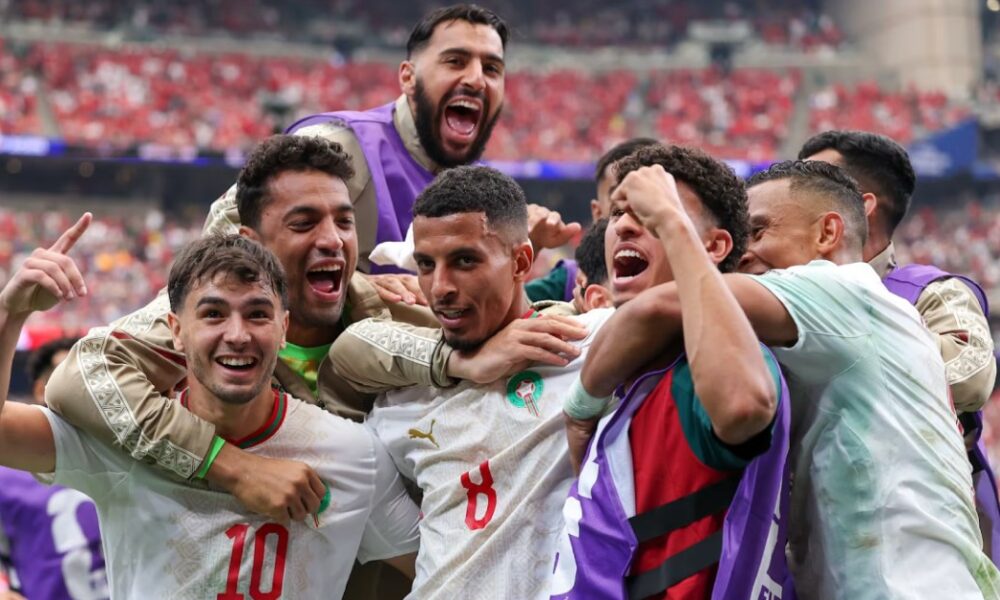
 Modern Diplomacy says the Atlas Lions have helped strengthen Morocco's soft power and international image through football.
 Morocco’s success on the football pitch has become a powerful driver of the country’s international influence, with the Atlas Lions helping strengthen the Kingdom’s image and global standing, according to an analysis published by Bulgarian magazine Modern Diplomacy.
In an article titled How Football Reveals Morocco’s Rise as a Connective Power, the publication argues that football has evolved beyond sport to become a key instrument of Morocco’s soft power, allowing the country to project its influence, showcase its modernization and reinforce its strategic role on the international stage.
The analysis points to Morocco’s sustained investment in sports infrastructure, its successful hosting of major international competitions and the growing presence of Moroccan players in Europe’s top clubs as factors that have raised the country’s international profile.
Football Reflects Morocco’s Long-Term Vision
Modern Diplomacy says Morocco’s rise in world football mirrors broader long-term developments across the country.
The publication cites the Atlas Lions’ historic run to the semifinals of the 2022 FIFA World Cup in Qatar, saying it introduced global audiences to “a modern Morocco” that is confident in its identity, proud of its history and engaged in a far-reaching process of transformation.
It adds that the success of a national football team often reflects deeper progress in governance, investment, youth development and the ability to pursue long-term objectives.
As an example, the magazine highlights the Mohammed VI Football Academy, describing it as one of the clearest expressions of Morocco’s long-term football strategy. It also points to Morocco’s victory at the 2025 FIFA U-20 World Cup as evidence of the depth of the country’s football structure.
More Than Results on the Pitch
Beyond its sporting achievements, Modern Diplomacy says the Atlas Lions have projected an image rooted in family values, humility and respect for opponents.
According to the publication, moments such as players embracing their mothers after victories resonated with audiences in ways that athletic performance alone rarely achieves, creating a strong sense of identification beyond football.
Looking ahead to the 2030 FIFA World Cup, which Morocco will co-host with Spain and Portugal, the magazine says the tournament represents more than a sporting milestone. It argues that the event recognizes Morocco’s organizational capacity while reinforcing its role as a bridge linking Africa, Europe, the Mediterranean and the Atlantic.
The publication concludes that football did not transform Morocco’s place in the world but made that transformation “impossible to ignore”.
- Source: MAP