



 Versailles, Wednesday: a deal signed over dinner that left thousands of questions unanswered — and 60 days to find the answers.
 The Strait of Hormuz reopens, Iranian oil flows again, and two adversaries have 60 days to settle questions that have defined the Middle East for decades — but missiles, proxies, and Lebanon are conspicuously absent from the table.
Table Of Content
The war between the United States and Iran is over — for now. The interim deal reached by the two countries will reopen the Strait of Hormuz, lift the US blockade of Iranian ports, allow Iran to sell its oil on the open market again, and set a 60-day negotiating window to address Tehran’s nuclear programme. What it will not do, at least immediately, is resolve the deeper questions that made the war possible in the first place.
Trump signed the agreement on Wednesday while dining with French President Emmanuel Macron at the Palace of Versailles. In Tehran, President Masoud Pezeshkian signed the same document; Iran’s state-run IRNA news agency posted an image of him holding it up, bearing both signatures.
The deal was described in detail by US officials who spoke on condition of anonymity, as Washington has not yet officially released the text.
What Iran gets immediately
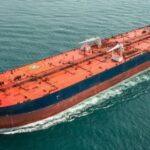
The most immediate gain for Iran is economic. The deal waives — without eliminating — the sanctions Trump placed on Iranian oil exports, restoring a revenue stream worth billions of dollars. Last year, Iran earned an estimated $45 billion from oil sales, but under significant constraints: China was its only major buyer, and crude had to be shipped through a shadow fleet of tankers to evade sanctions, cutting into profits. Since April, under the blockade, exports had nearly stopped altogether.
With the waiver in place, Iran will be able to seek more buyers and command higher prices. Passage through the Strait of Hormuz — through which roughly a fifth of the world’s traded oil passed before the war — will be toll-free for 60 days. The deal does not preclude fees after that period.
Iran’s closure of the strait was perhaps its most powerful weapon. It drove up global fuel prices, made food and fertiliser more expensive, and pushed US inflation to 4% ahead of the midterm congressional elections.
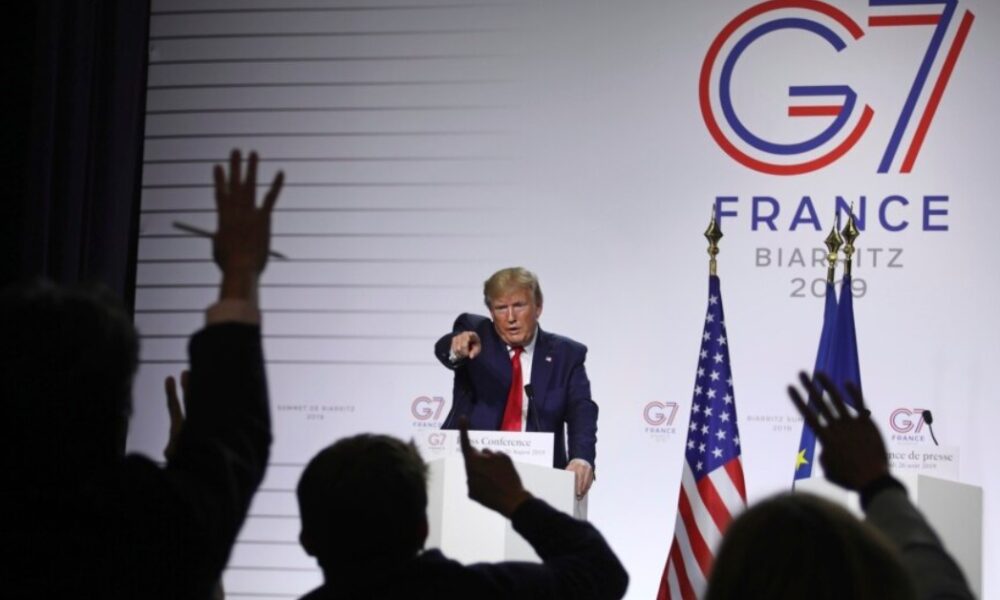
“Netanyahu has to be more responsible with respect to Lebanon”. — US President Donald Trump, G7 summit, France
What the deal promises for later
Looking further ahead, the draft agreement outlines substantial incentives if Iran and the US reach a full nuclear accord. These include the eventual lifting of all international sanctions — an offer that appears to go further than the 2015 deal, which removed only nuclear-related sanctions while leaving others tied to allegations of terrorism support and rights abuses.
The interim deal also promises a $300 billion reconstruction fund. Trump has said the US will not contribute to it; the source of the money is not specified. For context, the World Bank estimates Syria needs $215 billion after 13 years of civil war, and the Gaza Strip needs $53 billion after two years of conflict with Israel.
The deal also promises to unfreeze billions of dollars in Iranian assets held abroad, under a procedure the two sides will work out during negotiations.
On the nuclear side, Iran’s highly enriched uranium would be diluted under International Atomic Energy Agency supervision — with the specifics to be settled during the 60-day talks. Iran maintains it has the right to continue its enrichment programme, which it developed after Trump abandoned the 2015 accord.
What is not on the table
Before the war, the Trump administration stated its aims included obliterating Iran’s missile arsenal, severing its support for armed proxies, and annihilating its navy. Seven weeks of US-Israeli bombardment are believed to have heavily damaged Iran’s missiles and production facilities — though the full extent is unknown, and Iran was still firing on Israel as recently as last week.
Iran’s ties with Hezbollah in Lebanon, the Houthis in Yemen, and Shiite militias in Iraq appear as strong as ever. Neither the missile question nor Iran’s support for its regional allies features in the upcoming negotiations.
The Lebanon problem
The deal calls for an end to the war in Lebanon, where Israel has been fighting Hezbollah. But neither Israel nor Hezbollah is party to the agreement. Iran insists Israel must withdraw from the large area of southern Lebanon it currently occupies; the text only guarantees Lebanon’s “territorial integrity”, without explicitly requiring a withdrawal.
Israel has vowed to keep its troops in Lebanon. Hezbollah says it is committed to resisting until full withdrawal is achieved. Renewed fighting between the two could unravel the deal unless Washington and Tehran can restrain their respective allies.
Israel and the US — a strained alliance
Israel was excluded from the negotiations entirely. Israelis across the political spectrum have called the deal a disaster, directing their anger at Prime Minister Benjamin Netanyahu. Trump himself has not been restrained in his language, having described Netanyahu as “crazy” and telling the G7 in France that he “has to be more responsible with respect to Lebanon”.
Netanyahu faces national elections later this year and finds himself in a delicate position: his relationship with Trump may require scaling back a military campaign in Lebanon that remains broadly popular at home.
What the 60 days must decide
The 2015 nuclear accord, negotiated under the Obama administration, capped Iran’s uranium enrichment at a low level, limited its stockpile to 300 kilograms, sharply reduced its centrifuge count, and placed it under stricter IAEA inspections — for 15 years. Trump’s central criticism was that time limit, after which opponents argued Iran could quickly ramp up its bomb-making capability.
The key question now is whether the US can secure tighter limits for a longer term. Both countries have agreed to find out, starting from a position that is, as the AP notes, more or less where they were three and a half months ago — before the war began and thousands died.
- Source: The Associated Press