





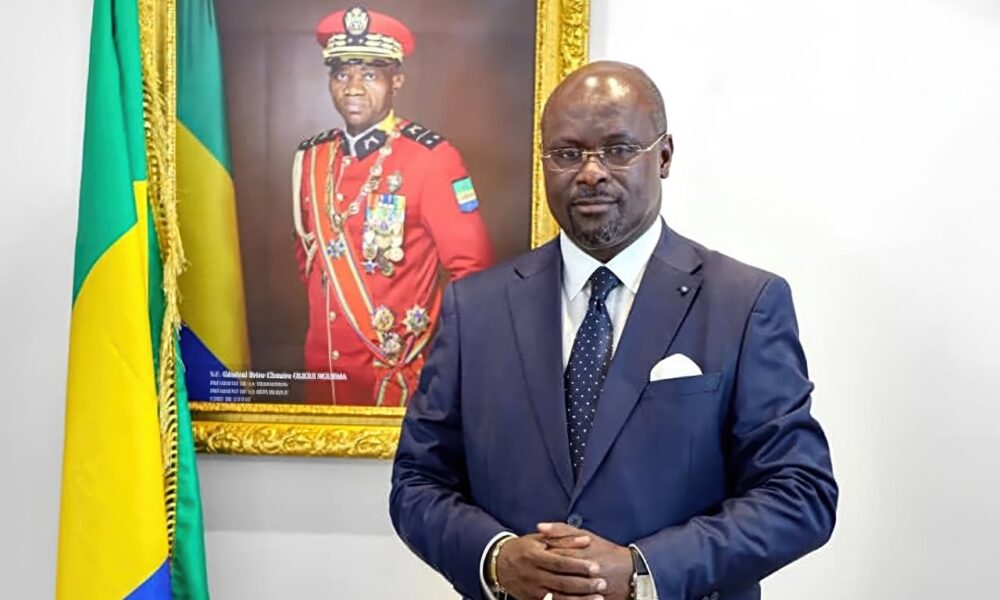
 The President of Gabon’s National Assembly, Régis Onanga Ndiaye
 Libreville – The President of Gabon’s National Assembly, Régis Onanga Ndiaye, reaffirmed on Tuesday his country’s consistent support for Morocco’s sovereignty over the Sahara.
During talks in Libreville with the Vice President of Morocco’s House of Representatives, Mohamed Ghayate, Ndiaye reiterated Gabon’s firm position in backing Morocco’s territorial integrity.
He emphasized that this stance is a key principle of Gabon’s foreign policy, while also praising the strong historical and brotherly ties between the two nations.
On the parliamentary level, Ndiaye expressed Gabon’s interest in learning from Morocco’s experience in modernizing legislative work. He highlighted the importance of sharing expertise, particularly following the international parliamentary seminar held in Libreville from April 27 to 29.
He also stressed the need to strengthen bilateral parliamentary cooperation, pointing to the important role of parliamentary diplomacy and friendship groups in exchanging legislative practices, especially in areas such as lawmaking procedures and amendment mechanisms.
For his part, Mohamed Ghayate thanked Gabon for its clear and consistent support for Morocco’s sovereignty over the Sahara, as well as for its backing within regional and international organizations.
He also underlined the growing momentum of institutional cooperation between the two countries, noting Gabon’s active participation in parliamentary events held in Morocco. He reaffirmed the commitment of Morocco’s House of Representatives to further deepen ties with Gabon’s National Assembly.
Both sides highlighted that their cooperation extends to several strategic sectors, including the economy, education, security, and vocational training, all aimed at supporting sustainable development in both countries.
They also stressed the importance of continued coordination and dialogue to strengthen modern institutional frameworks that meet the expectations of both peoples, while adapting to digital transformation and promoting greater parliamentary transparency.