



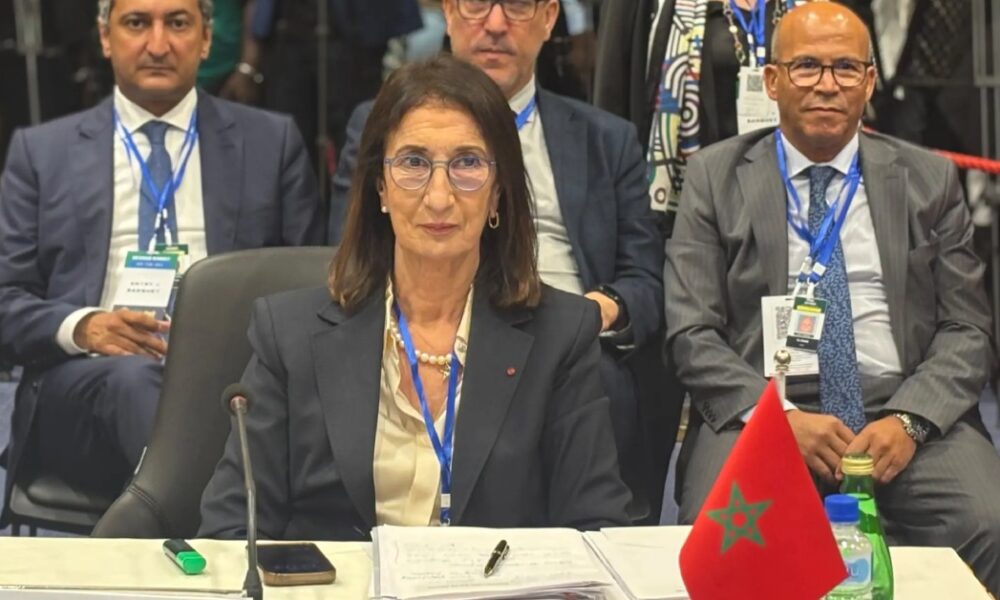
The gas deal that could reshape African energy got its most significant endorsement yet on Sunday. At the 69th ECOWAS Summit in Freetown, Sierra Leone, heads of state and government signed the Intergovernmental Agreement governing the development of the Nigeria-Morocco African Atlantic Gas Pipeline — a nearly 6,800-kilometre infrastructure that will carry natural gas from Nigeria to Morocco and on to the European gas network. The project, estimated at approximately $25 billion, is jointly developed by Morocco’s ONHYM and Nigeria’s NNPC Ltd., and was initiated by King Mohammed VI and the late Nigerian President Muhammadu Buhari, with the continued support of President Bola Ahmed Tinubu.
Table Of Content
What began as a bilateral initiative between Morocco and Nigeria has now become West Africa’s collective project — and the leaders gathered in Freetown made clear they understood the scale of what they had signed.
“This project is not a mere energy initiative — it is a transformative investment in the collective future of the entire region”. — Joseph Boakai, President of Liberia
What the agreement sets in motion
The signed agreement opens the next implementation phase: the creation of a Project Company headquartered in Casablanca, and a Pipeline Higher Authority based in Abuja. These will precede investor mobilisation and the preparation of the Final Investment Decision. A subsequent ceremony in Morocco will see the Kingdom and Mauritania jointly sign the agreement in the presence of the Nigerian president — the two non-ECOWAS member states completing the circle.
ONHYM and NNPC Ltd. confirmed that the main engineering, environmental, and technical studies have been completed, allowing the project to enter its operational development phase. The first pipeline segments are expected to be commissioned at the beginning of the next decade.
Once complete, the pipeline will cross thirteen countries along Africa’s Atlantic coast, connect to the Maghreb-Europe gas pipeline in northern Morocco, and carry up to 30 billion cubic metres of natural gas per year — up to 15 billion destined for Morocco and Europe, with the remainder supplying regional markets to support electricity generation and industrialisation.
What West Africa’s leaders said
Liberian President Joseph Boakai called it a “major breakthrough” and a “necessary achievement”, adding that it “demonstrates what can be achieved when African nations prioritize cooperation over fragmentation”. Ghana’s Foreign Minister Samuel Okudzeto Ablakwa described it as a “historic initiative” — “if we want to industrialize our countries for the benefit of our people, we must invest in infrastructure”, he said. The Gambia’s Foreign Minister Sering Modou Njie said his country was “honoured to take part”, calling the pipeline a “flagship project that will benefit West African countries”.
A development corridor, not just a pipe
Beyond energy, the African Atlantic Gas Pipeline is designed as a development corridor — connecting African economies, strengthening regional integration, and boosting competitiveness. For Morocco and Nigeria, Africa’s energy security is a fundamental driver of sovereignty and shared prosperity. The Freetown Summit’s collective endorsement confirms the project’s continental ambition and its central role in Africa’s integration agenda.