




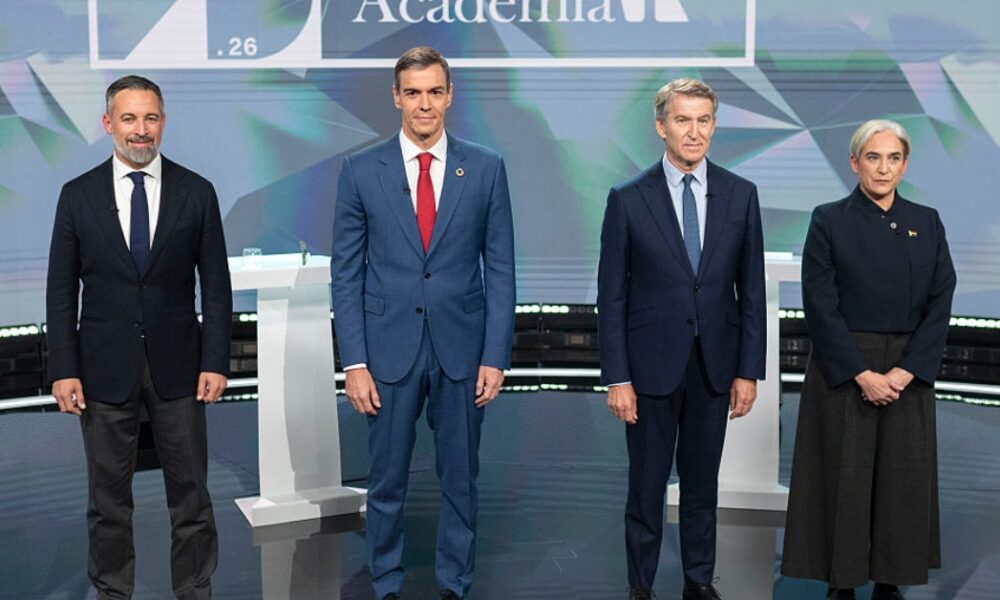
With Spain voting on Sunday, analyst Ignacio Molina Alvarez argues that Pedro Sánchez may go, but a right-wing government would struggle to unwind Madrid’s Sahara stance, and might even lock it in.
Table Of Content
A right-wing victory in Spain’s election would not necessarily push Madrid to abandon its Sahara stance, including its support for Morocco’s autonomy plan, and could even lift that position out of Spanish party politics, Spanish analyst Ignacio Molina Alvarez said in an interview with 24Saa/MT ahead of Sunday’s vote.
Molina is a professor of political science and international relations at the Autonomous University of Madrid and principal researcher at the Elcano Royal Institute for International Studies. He said the departure of Prime Minister Pedro Sánchez does not mean Morocco will lose Spain’s position on the Moroccan Sahara. Under certain conditions, he said, a right-wing government could be a chance to anchor it.
What the opposition’s program says on the Sahara stance
Molina pointed to the Popular Party (PP) program, page 74 in particular. Despite its earlier criticism of Sánchez, he said, the party did not explicitly pledge to cancel its support for the Moroccan proposal. Nor did it call for a referendum that includes an independence option. It called only for a negotiated settlement within the framework of the United Nations.
The most striking scenario, in my view, is that the Spanish right reaches power promising to correct Sánchez’s policy toward Morocco, and ends up entrenching the most important diplomatic shift Sánchez achieved on the Sahara file. — Ignacio Molina Alvarez
“In politics, one has to pay attention to what parties deliberately leave out of their programs as much as to what they write in them”, he said.
The shift did not stop at the March 2022 letter, Molina added. A joint declaration issued in December 2025 included wording that genuine autonomy under Moroccan sovereignty could be the most feasible solution.
He said PP leader Feijóo could adjust the diplomatic wording to please some voters. A full reversal, though, would mean taking responsibility for destabilizing the bilateral framework built since 2022, with no guarantee of strategic gains from Algeria. Part of the sympathy for the Polisario inside Spain rests on historical legacy and associational and political ties, he said, while the state’s foreign policy follows different strategic considerations.
Vox and Morocco
Molina said Vox gives Morocco a prominent place in its foreign policy outlook, on Occupied Ceuta and Occupied Melilla, borders and migration. Its program leans toward a tougher line with Rabat and goes as far as proposing sanctions.
He saw a contradiction. The party wants to cut irregular migration while taking a confrontational tone toward one of the countries Spain relies on to manage it. Vox could make Morocco an electoral adversary, he said, but on entering state institutions it would find a security partner that is hard to do without.
Vox support among voters aged 18 to 24 rose from 14% to 23% compared with the 2023 election, he said. Among those aged 25 to 34 it rose from 12% to 23%.

A vote decided by majorities, not votes alone
Sánchez could lose the election without losing his ability to lead a government, Molina said, and could win it without being able to stay at the Moncloa palace. The Spanish system, he explained, is decided by the ability to build a parliamentary majority, not by vote counts alone.
He cited two readings of the polls. The latest survey from Spain’s social research institute gave the Socialists 34%, the PP 24% and Vox 15%. The average of polls puts the PP first with 31%, the Socialists on 29% and Vox on 17%.
Feijóo himself could end up the biggest political loser, he said, if he wins and finds the keys to the Moncloa in the pocket of the far-right leader.
Spain’s real divide is no longer only between right and left, Molina said, but between those who own property and those who cannot pay rent, and between a generation that benefited from the economic shift and one that feels shut out of its fruits.
Why Madrid may think twice
Feijóo said on November 4 that Morocco would be the first country outside the European Union he would visit if he becomes prime minister. Molina said geography and economic and security interests eventually override party calculations. Some Spanish politicians describe Morocco as a threat, he said, while major Spanish companies see a market for growth and an industrial base.
“Morocco needs Spain, but Spain can no longer assume that Morocco needs it more than it needs Morocco”, he said. He added that Morocco can now diversify its industrial, trade and military partners. Any Spanish prime minister who tries to challenge that reality would hit a wall of national interests, he said.