





 Midparc, Nouaceur — thirty global aerospace groups, one platform, and a country moving fast up the value chain.
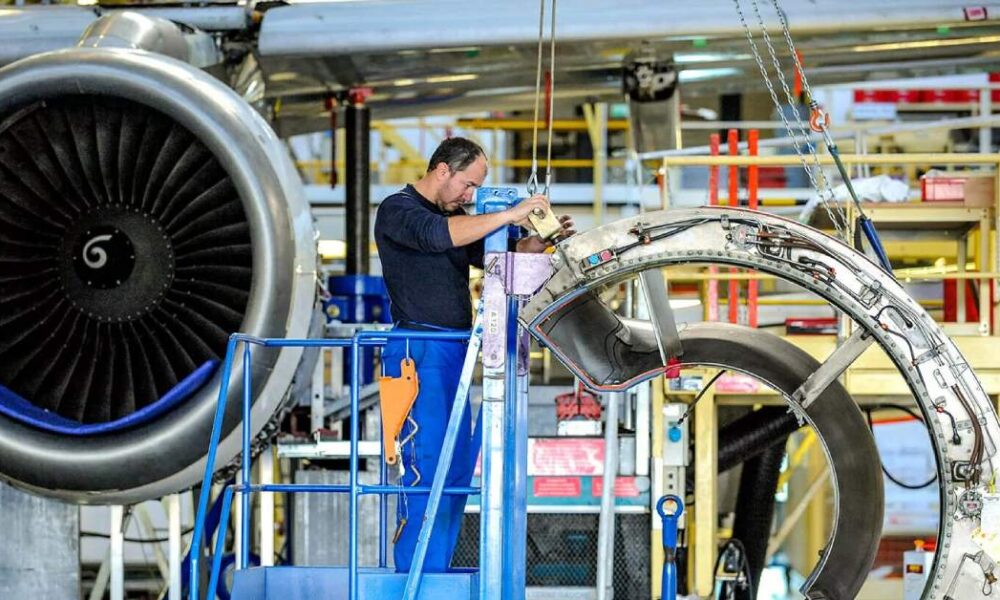
 Morocco’s aviation industry is undergoing a structural transformation — moving from basic subcontracting assembly to high-precision component manufacturing — as Midparc in Nouaceur becomes one of the world’s most concentrated aerospace industrial platforms, according to an analysis by L’Économiste.
Morocco’s aerospace industry is no longer what it was a decade ago. The country has moved — and is still moving — from a role as a low-cost assembly destination for international subcontractors toward a position as a manufacturer of complex, high-precision components integrated into global aerospace supply chains. The shift is structural, and it is accelerating.
At its centre is Midparc, the industrial zone in Nouaceur that has become the hub of this dynamic, now hosting around thirty major international aerospace groups. The list reads like a who’s who of global aviation: Airbus has production units there, Hexcel — specialising in composite materials — has opened its third site, and a constellation of companies including Eaton, Thales, Nexans, Masterflex and Ateliers de Haute-Garonne have reinforced the platform’s supply chain integration.
“Qualified human capital and the depth of Morocco’s industrial ecosystem have become the decisive factors in attracting investment — more than fiscal incentives alone”. — Industry professionals cited by L’Économiste · June 2026
The pipeline of new arrivals is equally significant. Daher Group is preparing to transfer part of its standard production for the Airbus A320, A330 and A350 programmes from Tarbes, France, to its Tangier site — a transition running from September 2026 through end-2027. Pratt & Whitney opened a major factory inside Midparc in April, with 200 jobs expected by 2030. Safran continues to expand its high-precision landing gear assembly operations under strict international certification standards.
The sector currently comprises 155 companies, generates approximately $3 billion in export revenues, and employs around 27,000 workers. The sectoral strategy targets a doubling of exports over five years at an annual growth rate of 15% — numbers that reflect Morocco’s ambition to consolidate its position among advanced industrial nations in aerospace.
Land is running out — and talent is the new differentiator
The momentum has also exposed a structural constraint: Midparc is approaching saturation. The Moroccan Association of Aeronautical Industries, in partnership with the Caisse de Dépôt et de Gestion and the Ministry of Industry, has launched studies to identify new industrial land reserves and is planning a medium-term expansion of the Nouaceur platform.
Meanwhile, industry professionals are clear that the game has changed. Fiscal incentives, while still relevant, are no longer the decisive factor in attracting investment. What pulls major aerospace groups to Morocco today is the availability of qualified human capital and the depth of the national industrial ecosystem — two assets that Morocco has built methodically, and that are increasingly difficult for competing destinations to replicate.