




Nigeria–Morocco gas pipeline project has entered a decisive stage with the structuring of a dedicated project company, marking a key step toward mobilizing funding for the estimated $25 billion infrastructure, according to Les Inspirations Eco.
The planned pipeline, one of the largest energy projects in Africa, is designed to transport natural gas from Nigeria’s reserves across West Africa to Morocco, with a potential extension toward Europe. Beyond its export role, it is also intended as a regional energy corridor aimed at boosting electricity generation, industrial development, and energy access in transit countries.
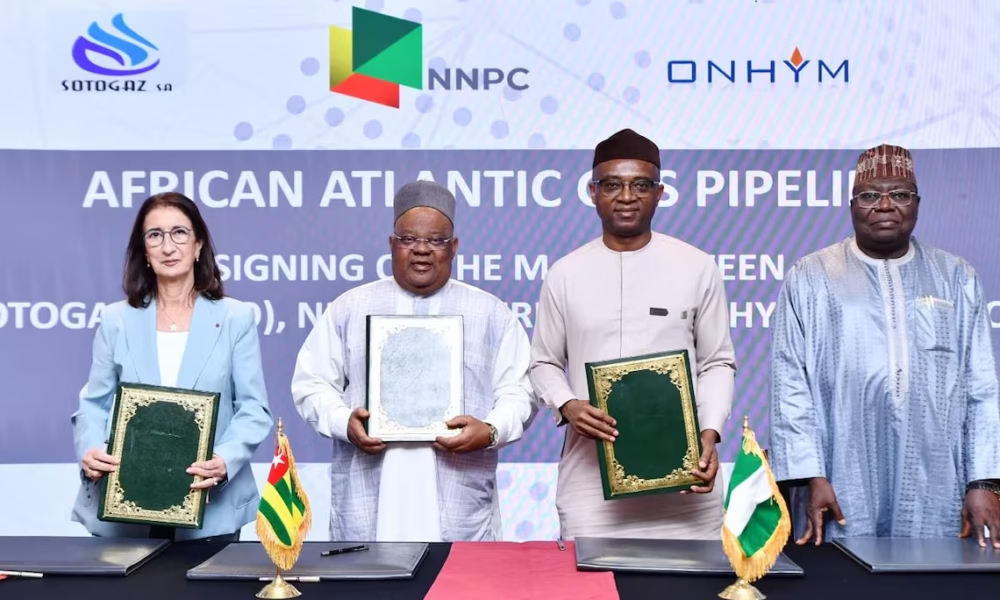
At the center of the new phase is the creation of a Special Purpose Vehicle (SPV), which will be responsible for overseeing financing arrangements and project execution. The SPV will be established as a joint venture between Morocco’s National Office of Hydrocarbons and Mines (ONHYM) and the Nigerian National Petroleum Company (NNPC), although no final financial commitments have yet been made.
Unlike initial assumptions, funding will not be directly raised by ONHYM, but through this dedicated structure once it is formally created and approved by the relevant authorities. The SPV model is intended to isolate risks, assets, and future revenues, providing a clearer framework for international investors.
The project remains complex due to its multinational scope, involving 13 West African countries under an intergovernmental framework still being finalized. The Intergovernmental Agreement (IGA), signed in December 2024 during a ECOWAS summit, laid the foundation for governance structures, including a High Authority to coordinate political oversight and a Project Company to manage operations.
Ratification of the agreement is expected in 2026, a step seen as crucial before large-scale financing can be secured.
Officials involved in the project say the next phase will be decisive in turning political commitments into concrete industrial and financial arrangements for what could become a major shift in West Africa’s energy landscape and reinforce Morocco’s role as a regional energy hub.
Read also: Luxembourg’s Delles targets deeper business ties on Morocco visit