




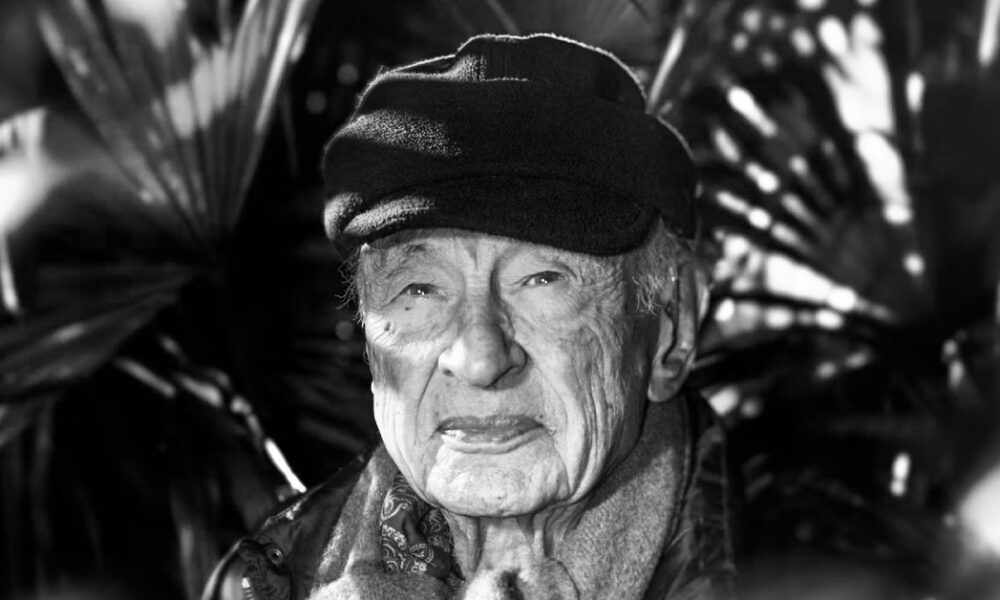
 "At Paris or in Marrakech, I never stopped being curious". Edgar Morin, 1921–2026.
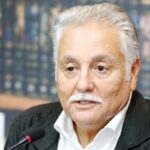
 Edgar Morin, one of France’s most towering intellectual figures, died Friday at the age of 104. The news prompted an outpouring of tributes across France and beyond — including in Morocco, the country where he had chosen to spend a significant part of his final years, and where his absence is felt with a particular, intimate grief.
His wife Sabah Abouessalam Morin, herself Moroccan, captured the man that both Paris and Marrakech had come to cherish: “Until his final days, Edgar Morin remained attentive to the world, to others, and to the great human questions that nourished his thinking. The void he leaves is immense”.
A Mind That Refused All Borders
Born Edgar Nahoum in Paris on July 8, 1921, to a Jewish family of Greek origin, Morin joined the French Resistance at 20, adopting the surname Morin as a wartime pseudonym — a name he kept for life. His intellectual journey proved as restless as his wartime one: historian, philosopher, sociologist, ecologist, he spent decades dismantling the walls between disciplines, building what he called “complex thinking” — a method for understanding the world whole rather than in fragments.
His major work, the six-volume La Méthode, published between 1977 and 2004, remains a landmark of Western thought. Honorary doctor of 38 foreign universities and author of some forty widely translated books, he published his final work — Y a-t-il des leçons de l’Histoire? — in 2025, written in part during his stays in Marrakech.
French President Emmanuel Macron paid tribute to “a universal spirit — soldier of the Resistance, writer and thinker of the century, defender of nature and peoples”. Jean-Luc Mélenchon saluted “an antifascist, a resistance fighter, a theorist of complexity”. UNESCO called his work “a method for the future”.
Marrakech: Where the Light Was Kinder
“The older I get, the more I need the sun. I hate the grey Parisian autumns and winters”, Morin said in one of his last interviews, given in March 2025 at his Marrakech villa — seated in an armchair, facing a garden where bougainvillea cascaded from the balcony, his voice still clear and his mind still ranging freely across history and humanity.
Morocco was far more than a winter retreat. In February 2024, he appeared at the African Book Festival in Marrakech, praising Morocco’s policy of openness toward the African continent as “a very beautiful initiative”, closing with characteristic warmth: “Vive l’Afrique, vive le Maroc.”. He had even considered converting a farm near Marrakech into an agroecology project — a plan that never materialised, but that spoke to the depth of his roots in Moroccan soil.
It was Sabah, his wife of more than fifteen years and co-president of the Edgar Morin Foundation, who anchored his life between the two cities. “At Paris or in Marrakech, I never stopped being curious about the world of which I am one atom”, he confided. She would say of him, with equal parts pride and tenderness: “I live with the man who carries the world on his shoulders”.
Asked in that final Marrakech interview what he wished to be remembered for, his answer needed no complexity: “What matters is love and friendship, benevolence and understanding of others. When these qualities are absent, we are blind, we are petty, we are terrible”.
He is survived by his wife Sabah, his two daughters Irène and Véronique, and a body of work that will outlast the century he so thoroughly — and so luminously — inhabited.
- Sources: AFP, Le Parisien, MAP