





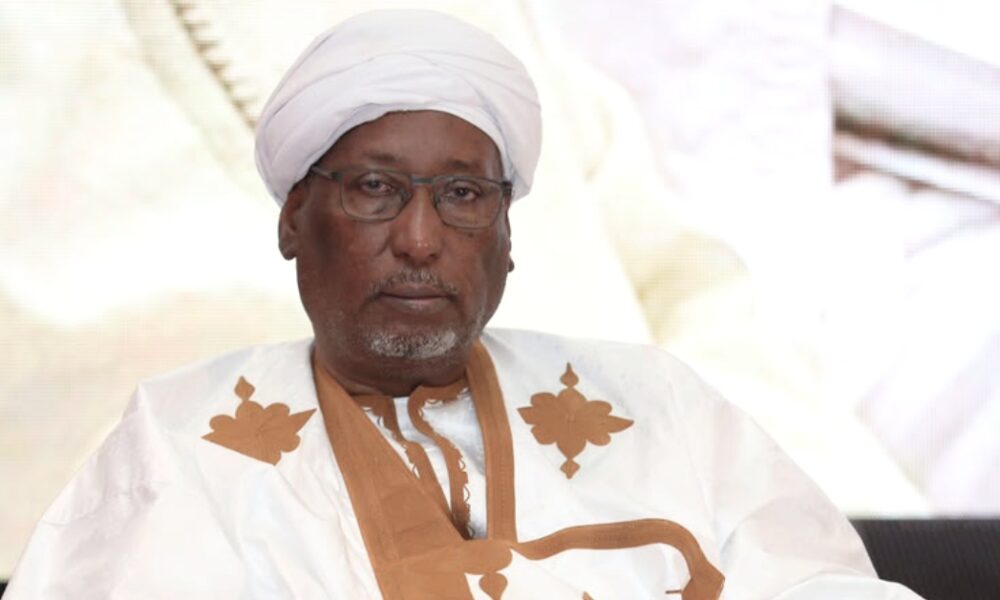
 Mohamed El Hanafi Dahah
 Morocco’s experience managing religious affairs is a model worth studying and adapting elsewhere, according to Mohamed El Hanafi Dahah, a Mauritanian academic who teaches Imamate and Islamic governance at the University of Nouakchott. In an interview with the Maghreb Arabe Presse agency, Dahah said countries including Mauritania could “replicate it in ways that suit their own particularities”.
He traced the cultural, spiritual, scientific and religious ties between the two countries back centuries, describing a long history of scholars moving between Morocco and the historic region of Bilad Chinguet — movement he says has kept scholarly contact alive to this day.
Dahah, who also serves as deputy head of the Supreme Council of the Association of Alumni of Moroccan Universities, Schools and Institutes, pointed to teaching methods as one clear sign of this shared inheritance. Morocco’s traditional schools and Mauritania’s mahdaras — the traditional Quranic schools of the Chinguetti tradition — both blend old and modern methods, he said, and today follow the same curricula developed in Morocco’s ancient schools.
What sets the mahdara apart, he explained, is its emphasis on memorization — a product of how few books were available. Those that did arrive came mostly from Morocco, whose scholars pilgrims would seek out en route to Mecca, both to consult them and to acquire manuscripts. Rather than being passed hand to hand, each rare book would instead be memorized and versified, Dahah said, making it easier for students to retain and less likely to be lost amid the mobile, nomadic lifestyle of the region.
On academic cooperation, Dahah said Mauritania hopes to draw on Morocco’s “scientific chairs”, where senior scholars broadcast lessons on dedicated television channels. He suggested the reverse could also work: material taught on Mauritania’s “Mahdara Channel” could air on Moroccan television, benefiting students in both countries. He also proposed exchanges between the Chinguetti mahdara in Akjoujt and students from Rabat’s Dar al-Hadith al-Hassania, Al Quaraouiyine University, and institutes under Morocco’s religious affairs ministry, alongside their Mauritanian counterparts, including the Higher Institute for Islamic Studies and Research and the University of Islamic Sciences in Aïoun El Atrouss, in southern Mauritania.
Dahah also highlighted cooperation on religious endowments, welcoming the recent signing in Rabat of an executive program under a bilateral memorandum of understanding on endowments and Islamic affairs covering 2026 to 2028. He said the greatest gains would likely come in mosque management, an area where he said Morocco’s experience — in equipping and restoring mosques, among other services — has already proven effective.
Asked about the Mohammed VI Foundation of African Ulema, where he serves as secretary general of the Mauritania branch, Dahah praised its work promoting Islamic values and encouraging research. He said the foundation had strengthened ties across Morocco, Mauritania and the wider continent, calling it “a spiritual and scientific bridge” linking Morocco to Africa through branch offices that run competitions in the Quran and Hadith, alongside work on manuscripts and shared religious activities.
- Source: MAP