








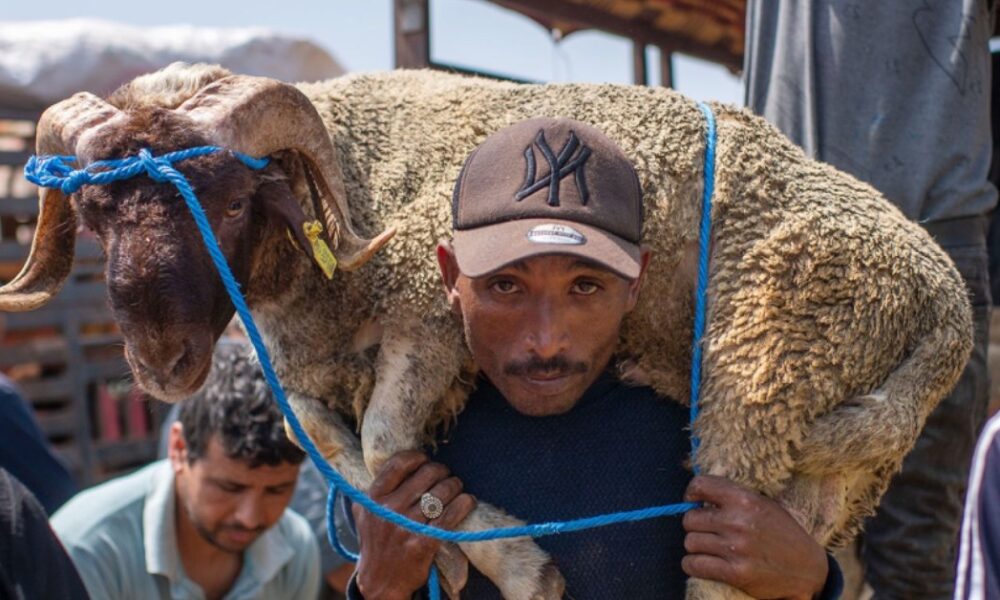
 The sheep are there. The prices aren't. For many Moroccan families, Eid Al-Adha 2026 begins with a calculation they can't afford to make.
 Every Eid Al-Adha, the same crisis returns to Morocco’s livestock markets: prices spike, families cut back, and the state stays silent. This year, parliamentarian Fatima Tamni — deputy for the Democratic Left Federation — decided to name it not as market failure, but as political choice.
“The government of billionaires deliberately buried Article 4”, Tamni said in a statement, referring to the provision in the Law on Price Freedom and Competition that grants the executive clear authority to intervene when markets descend into speculation, monopoly and hoarding. Activating it, she argued, would mean confronting the fuel lobbies, intermediaries and monopolists who “have accumulated obscene profits at the expense of Moroccans”.
The problem is no longer just the prices — it is in the nature of a power that protects the beneficiaries of inflation instead of protecting the citizen.
— Fatima Tamni, MP · Democratic Left Federation · 24 May 2026

Tamni’s indictment is pointed: the government, she says, knows who is speculating, knows who is hoarding, knows who is driving prices up — but refuses to act because those profiting are not strangers to Morocco’s circles of power and decision-making.
A consumer watchdog echoes the warning
The reading is echoed, in measured terms, by Noureddine Hmanou, president of the Moroccan Association for Consumer Protection, speaking to France 24. Official claims of abundant supply “are not reflected in reality inside the markets”, Hmanou said, where prices remain well beyond the purchasing power of a large number of citizens. The gap, he argues, stems from weak monitoring of intermediaries and speculators, and from inadequate price-regulation mechanisms. The early consumer withdrawal visible this year, he added, is “not a choice — it is a direct result of the economic pressure Moroccan families are living under”.
The government, for its part, issued a communiqué this week announcing regulatory measures for Eid livestock markets: confining sales to designated markets, requiring sellers to pre-declare their identity, animal count and origin, banning resale of sacrificial animals, and prohibiting artificial bidding wars and storage aimed at creating scarcity. Violations carry both prison sentences and fines.
Whether those measures will be enforced — or remain, as Tamni puts it, “ink on paper” — is the question Eid will answer.