


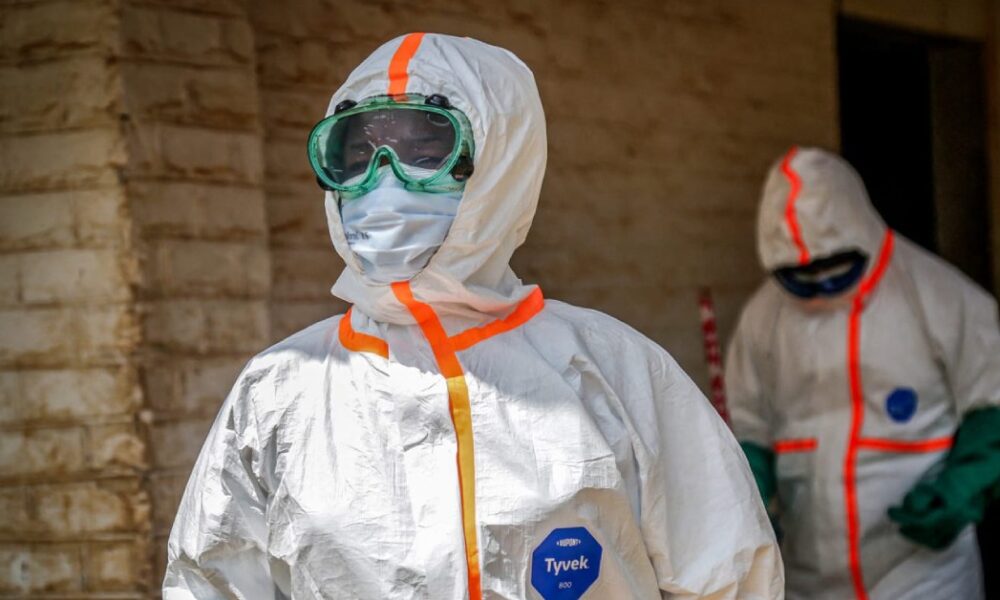
 Two hundred and four dead, no vaccine in sight — health workers on the ground are racing a virus that moves faster than the response.
 The Ebola epidemic in the Democratic Republic of Congo has killed 204 people out of 867 suspected cases, according to the latest figures from the country’s health ministry, published Saturday evening. The previous WHO count, released just 24 hours earlier, stood at 177 deaths across 750 suspected cases — a sharp jump that underscores the outbreak’s acceleration.
The DRC declared an Ebola epidemic on 15 May. The culprit is the Bundibugyo virus strain — for which no vaccine or specific treatment currently exists — with a fatality rate of up to 50%. Deaths have been recorded across three provinces.
The situation is probably far more extensive than confirmed cases alone suggest.
— WHO risk assessment, cited by MAP · 24 May 2026
On Friday, the WHO upgraded its national risk assessment for the DRC to “very high,” citing the rapid spread of the disease. The organisation has deployed 22 international experts on the ground and unlocked $3.9 million in emergency funding. The United Nations has separately allocated an additional $60 million to accelerate the response in the DRC and the wider region.
On Saturday, the health ministers of Uganda, DRC and South Sudan gathered in Kampala and adopted a cross-border action plan to coordinate their joint response — a sign that neighbouring governments are treating containment as a regional emergency.
The broader picture is sobering. Ebola has claimed more than 15,000 lives across Africa over the past 50 years, with mortality rates fluctuating between 25% and 90%, according to the WHO. The deadliest outbreak ever recorded in the DRC killed nearly 2,300 people from 3,500 cases between 2018 and 2020.