








 10,000 patients, 400 beds, robotic surgery — UM6P's hospital in Benguerir is redefining what a university hospital can be in Africa.
 More than 10,000 patients have already been treated at the University Hospital of Mohammed VI Polytechnique — through consultations, hospitalizations, medical procedures, and surgical interventions. That figure marks a new phase in the development of the Smart Health Care City project, as UM6P announces a consolidation of its hospital capacities, an expansion of its care pathways, and a deepening of its medical training, translational research, and clinical innovation activities.
The university hospital now operates 400 beds at full capacity, supported by a next-generation technical platform that includes a 3-Tesla MRI, a surgical suite equipped for minimally invasive and robotic surgery, a medical biology platform, a medical genetics and genomics service, and a fully robotized secure-circuit hospital pharmacy. Active care pathways cover emergencies, internal medicine, general surgery, gynecology-obstetrics, pulmonology, gastroenterology, interventional cardiology, infectious diseases, and other specialties.
Two units that address Morocco’s emerging health needs
Two specialized structures give the hospital a particular edge in addressing current health transitions. The first is a rehabilitation and recovery center including a hyperbaric oxygen therapy unit and a rehabilitation service dedicated to high-level athletes. The second is a geriatrics center focused on aging, age-related diseases, and dependency — a response to the demographic shift underway across Morocco and Africa.
The UM6P University Hospital was designed to respond simultaneously to territorial, academic, and scientific challenges — bringing specialized care to a region historically dependent on major urban centers.
— UM6P Smart Health Care City press release · Benguerir, May 19, 2026
A hospital that also trains and researches
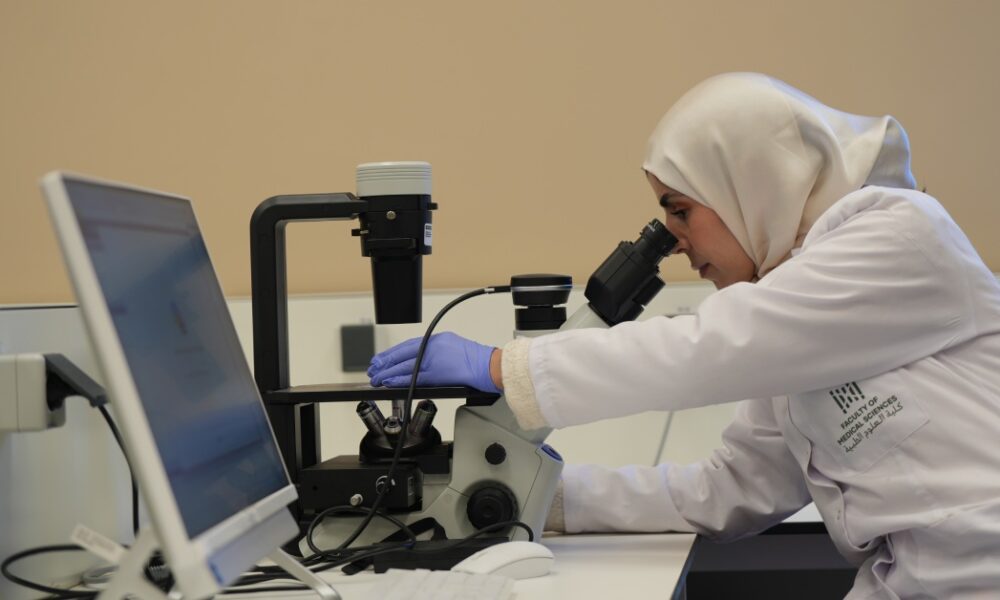
The hospital is built around the Faculty of Medical Sciences — integrating medical training, clinical practice, and research in a single model. Students in medicine, pharmacy, nursing, and physiotherapy benefit from early immersion in hospital wards, complemented by medical simulation and research initiation. The ecosystem brings together clinicians, biologists, pharmacists, engineers, and doctoral students in a translational research approach, with academic pathways that can lead to dual degrees in medicine and science.
Looking ahead, the hospital plans to establish a Clinical Investigation Center dedicated to clinical research and therapeutic trials — particularly in neurosciences, metabolic diseases, and chronic pathologies — structured to meet international standards and to integrate Moroccan and African patients into major biomedical research networks.