


 Bourita in Rabat: 40 ministerial meetings, a Rabat Declaration, and France aligned on the Sahara — the partnership has never been stronger.
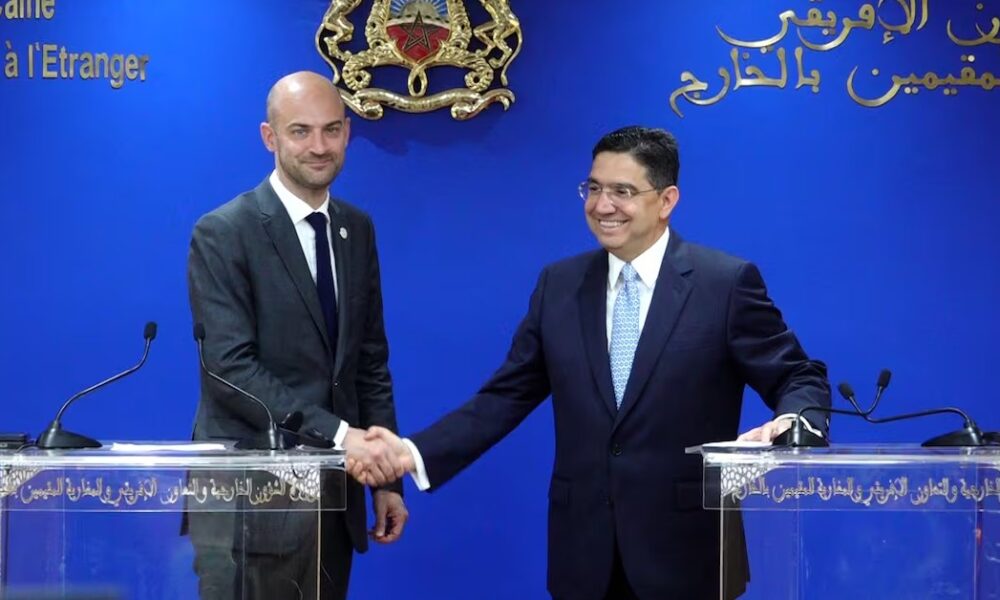
 Nasser Bourita, Morocco’s Minister of Foreign Affairs, stood before reporters on Wednesday with a clear verdict on the state of Morocco-France relations: they are, he said, at their most important and strongest momentum at all levels — and the partnership is now contributing not only to bilateral relations but to security and stability across the region. The press briefing followed talks with French Minister for Europe and Foreign Affairs Jean-Noël Barrot, held on the sidelines of the 2nd Ministerial Conference on Peacekeeping in a Francophone Environment, co-chaired by Morocco and France in Rabat.
Bourita traced the current momentum back to the October 2024 state visit of President Emmanuel Macron and his talks with King Mohammed VI. Since that visit, more than 40 meetings have brought together Moroccan and French ministers — a figure he cited as concrete evidence of the partnership’s intensity. Those meetings have consolidated cooperation across economic, security, consular, and human affairs, and have opened new prospects in cybersecurity, defense industries, and aeronautics — sectors Bourita described as reflecting “a strong, technology-oriented partnership focused on the future”.
The current dynamic does not seek to designate a winner and a loser, but to put an end to this regional dispute with its human consequences and repercussions on the stability and economy of the region.
— Nasser Bourita, Moroccan FM · Press briefing, Rabat, May 20, 2026
The Rabat Declaration: a new reference for UN peacekeeping
The 2nd Ministerial Conference on Peacekeeping in a Francophone Environment — co-chaired by Morocco and France — produced the “Rabat Declaration”, which Bourita said will serve as a reference for Francophone countries in their contribution to the reform of UN peacekeeping operations scheduled for the coming months. The goal, he said, is for these states to “speak with one voice” and push to make peacekeeping operations more effective and more efficient. The Declaration insists on the need to adapt missions to realities on the ground and to move away from terminology and mandates that have become outdated. Morocco and France will continue as co-chairs to present the Declaration’s conclusions to states and within the United Nations.
France’s position on the Sahara — and what it means
Bourita also used the press briefing to commend France’s position on the Moroccan Sahara — a position he said was not limited to statements but was “followed by structured actions and initiatives”. He framed the current opportunity as one to resolve the dispute through the Autonomy Plan under Moroccan sovereignty — now a UN reference under Security Council Resolution 2797 — expressing hope for positive results that would end what he called “this artificial conflict”. France’s position, he said, aligns with that of the United Nations as expressed in Resolution 2797. The two ministers also discussed the Middle East, the Sahel-Saharan region, and Africa, with both countries expressing convergence of views and a determination to act together in favor of stability and development on the African continent.