



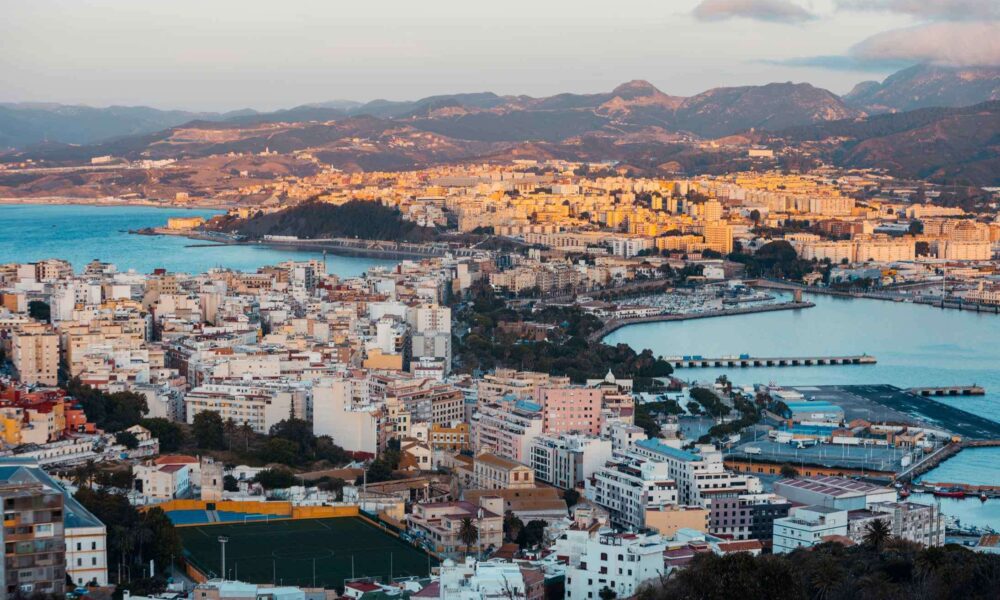
Washington – A document issued by the Appropriations Committee of the U.S. House of Representatives has brought renewed attention to the status of Ceuta and Melilla, suggesting the two Spanish-administered cities are geographically part of Morocco and calling for negotiations between Rabat and Madrid.
The initiative, led by Republican Congressman Mario Diaz-Balart, urges U.S. Secretary of State Marco Rubio to encourage dialogue between Morocco and Spain over the future of the two enclaves. The document reflects earlier remarks by Diaz-Balart, who stated that Ceuta and Melilla belong geographically to Morocco, prompting criticism in parts of Spain’s political and media circles.
The proposal goes further by recommending that former President Donald Trump support opening formal discussions on sovereignty, amid what it describes as a growing strategic partnership between Washington and Rabat. Spanish analysts have interpreted this as a possible shift in the U.S. position on the issue.
The development comes against the backdrop of tensions between Spain and the United States, particularly after Spanish Prime Minister Pedro Sánchez reportedly refused to allow the use of certain Spanish air bases for military operations, a move seen by some in Washington as a break from usual coordination among allies.
According to Reuters, the U.S. Department of Defense is reviewing possible responses, including measures that could affect Spain’s standing within the NATO. These tensions have added a broader strategic dimension to the issue.
Recent commentary from U.S. think tanks such as the American Enterprise Institute has also fueled debate, with some analysts calling for the U.S. to recognize Moroccan sovereignty over Ceuta and Melilla, similar to its previous recognition of Morocco’s position on Western Sahara.
The renewed attention from U.S. political and policy circles has raised concerns in Spain, where analysts are increasingly discussing potential geopolitical implications for the Western Mediterranean.
Read also: Morocco–US Relations Strengthened in High-Level Meetings in Boston and Massachusetts