








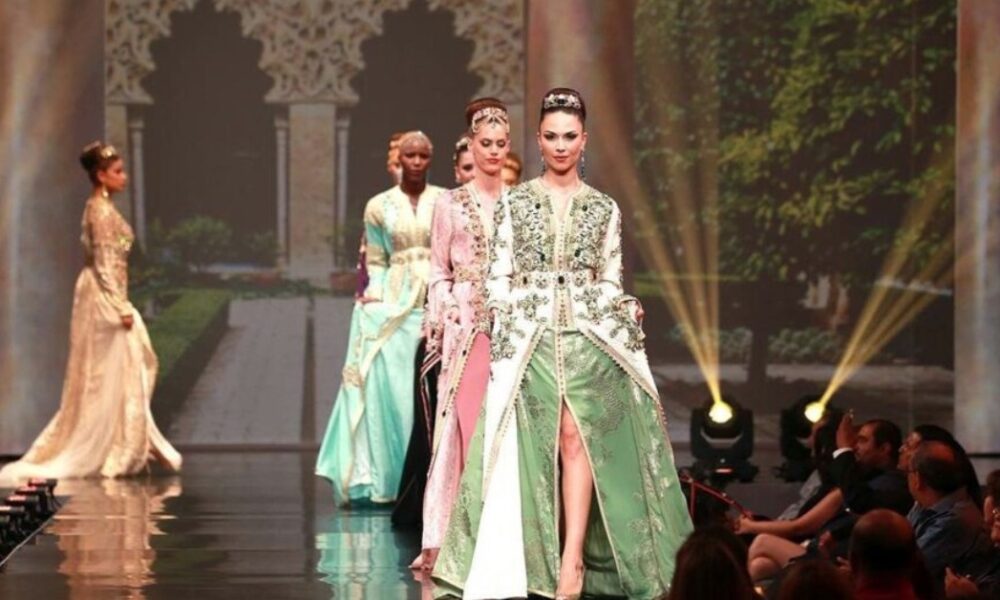
 Hangzhou, June 2026: centuries of Moroccan craftsmanship — sfifa, silk braiding, and bridal takchita — on display along the Silk Road.
 UNESCO-listed since 2025, the Moroccan caftan makes its most ambitious appearance yet — three months at the China National Silk Museum, where two civilisations meet through the art of dress.
It takes generations to make a caftan. The weaving, the embroidery, the sfifa — the decorative metallic braid that edges a garment like a signature — none of it is learned quickly, and none of it is easily forgotten. On June 24, the China National Silk Museum in Hangzhou opens its doors to an exhibition that makes exactly that argument: “The Moroccan Caftan: A Living National Heritage”, running through September 23, 2026, jointly supported by the Moroccan Ministry of Culture and the Moroccan Embassy in China.
It is the most comprehensive showcase of Moroccan sartorial art ever presented in China, spanning two galleries — the Textile Conservation Gallery and the Brocade Cafe Gallery — and arriving as the Guest Country of Honor exhibition of the 2026 Silk Road Week.
In 2025, “The Caftan: Art, Tradition, and Craftsmanship” was inscribed on UNESCO’s Representative List of the Intangible Cultural Heritage of Humanity, consolidating its status as a global cultural treasure. — Exhibition press release
Five chapters, one garment
The exhibition is structured around the theme of “Heritage and Innovation”, guiding visitors through five thematic sections that trace the evolution of traditional Moroccan dress while revealing the aesthetic sensibilities, social customs, and cultural identities embedded in each garment. Traditional caftans and accessories sourced from Fez, Rabat, Tetouan, Oujda and other historic regions are on display, complemented by archival photographs, multimedia installations, and hands-on craft demonstrations.
Special attention is given to the intricate techniques behind caftan making — from lace and laâqad to silk braiding, tnbat, and the renowned sfifa. The exhibition also showcases diverse regional embroidery styles, revealing the distinctive handiwork passed down through generations of Moroccan artisans.
Weddings, memory and identity
A dedicated focus is placed on Morocco’s bridal traditions, presenting wedding caftans and takchita — layered wedding gowns — that reflect the deep connections between dress, life-cycle rituals, family heritage, and communal identity. Morocco, situated at the crossroads of Africa, the Arab world, and Europe, has long been a meeting point of civilisations, and the caftan carries that layered history in every thread.
The exhibition builds a platform for dialogue between China and Morocco in cultural heritage preservation and museum cooperation — a fitting setting for Silk Road Week, whose premise is that the threads of tradition continue to weave bonds between civilisations across time and geography.
- Source: The Associated Press