


 Qatar's former PM to Arab world: Morocco built prosperity without oil — and oil republics should take note.
 Qatar’s former Prime Minister and Foreign Minister says Morocco’s exceptional economic rise is rooted not in natural resources but in the stability that monarchy provides — a verdict that carries particular weight coming from a man who spent decades managing Gulf petrodollars.
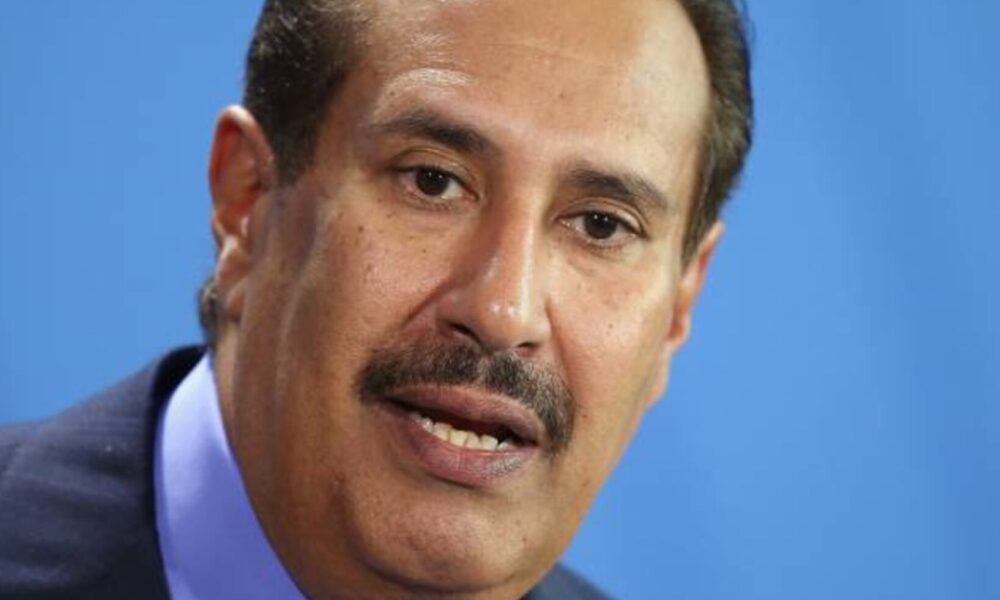
Sheikh Hamad bin Jassim Al Thani, Qatar’s former Prime Minister and Foreign Minister, praised Morocco’s “exceptional” economic development in a recent interview — and attributed it squarely to the stability provided by its monarchy, contrasting it with oil-rich republics that have failed to achieve comparable progress despite their vast wealth. The remarks, made on Al Jazeera 360’s “Al Muqabla” programme hosted by journalist Ali al-Dhafiri, drew wide attention across Arab social media and political and economic circles.
Hamad bin Jassim said Morocco is witnessing “great prosperity and stability, and wide investments with Europe, resulting from serious and sustained work”. He was explicit about the driver: this success, he said, is not linked to oil wealth but to “the nature of the monarchical system”, which provides continuity in state management — free from “narrow partisan or electoral calculations”. A king in such systems, he added, “is concerned only with the interest of his people and their satisfaction”, giving the state “cohesion and lasting prosperity.”
Morocco is witnessing great prosperity and stability, and wide investments with Europe, resulting from serious and sustained work — not from oil, but from the nature of the monarchical system.
— Sheikh Hamad bin Jassim Al Thani · Al Jazeera 360, “Al Muqabla” programme
A verdict from someone who knows oil wealth
The weight of the statement lies partly in who is making it. Hamad bin Jassim spent decades in senior leadership roles in Qatar and is considered one of the Gulf’s most prominent political and economic figures — a man with firsthand experience managing petrodollars and converting them into sustainable development. His praise of a non-oil monarchy carries a different register than most diplomatic compliments.
He extended the same argument to the six Gulf states, saying their stability and prosperity are not the product of oil and gas alone but of “smart investments and a governance approach that puts the citizen’s interest first”. This model, he said, extends to other Arab monarchies without oil resources — citing Morocco and Jordan — while some resource-rich republics have failed to achieve comparable progress, squandering their opportunities through institutional instability and lack of continuity.
Morocco’s numbers back the argument
The praise comes as Morocco’s economy records growth estimated at around 4.8% in 2025 — leading the Middle East and North Africa region despite chronic drought challenges. That growth rests on an economic diversification strategy launched by King Mohammed VI since he came to power in 1999, spanning manufacturing industries in automotive and aerospace sectors, major infrastructure projects including Tanger Med port and the high-speed rail line, renewable energy through the Noor project, and tourism that hit a record of more than 17 million visitors — alongside strong foreign direct investment from Europe and Africa.