





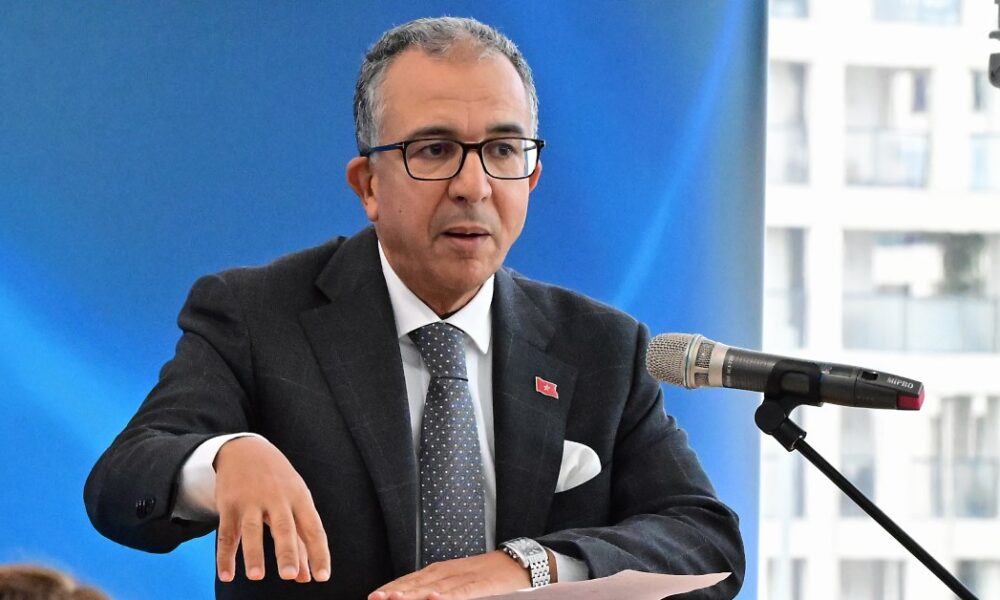
 Azzeddine Farhane, Morocco’s Permanent Representative to International Organizations in Vienna, advocates stronger global security cooperation.
 “The growing convergence between terrorism, organized crime, cybercrime, trafficking networks, illicit financial flows, and arms trafficking demonstrates that the threats of our time are interconnected”, Ambassador Azzeddine Farhane, Morocco’s Permanent Representative to International Organizations in Vienna, told delegates during the 35th session of the United Nations Commission on Crime Prevention and Criminal Justice (CCPCJ).
The statement came as Morocco called for stronger international cooperation and a renewed multilateral commitment to address increasingly complex security challenges that transcend borders and jurisdictions.
Speaking on behalf of the Kingdom, Farhane said Morocco has developed over the past two decades a comprehensive and forward-looking counter-terrorism strategy under the leadership of King Mohammed VI. The model combines robust security measures with human development policies, institutional reform, and the promotion of moderation, tolerance, and coexistence.
According to the diplomat, Morocco advocates a human-centered security architecture built on prevention, resilience, solidarity, and international cooperation, arguing that effective responses to modern threats require coordinated global action.
Morocco Expands International Security Cooperation
Farhane highlighted several initiatives that have strengthened Morocco’s role as a regional and international security partner. He noted that Rabat hosts the United Nations Office of Counter-Terrorism and Training in Africa, which has become a key platform for capacity-building, prevention, and cooperation efforts across the continent.
He also recalled Morocco’s hosting of the 93rd General Assembly of INTERPOL in Marrakech in 2025, an event that contributed to reinforcing cooperation among law-enforcement agencies worldwide.
The ambassador further underscored Morocco’s commitment to placing victims at the center of international counter-terrorism efforts through the International Conference on African Victims of Terrorism. He also highlighted the Kingdom’s contribution to preparations for the Fifteenth United Nations Congress on Crime Prevention and Criminal Justice.
As part of its ongoing international engagement, Morocco will host the Second International Forum of Prosecutors Countering Human Trafficking and Migrant Smuggling in Rabat from June 9 to 11, organized in partnership with the United Nations Office on Drugs and Crime (UNODC).
At the national level, Farhane said Morocco continues to modernize its criminal justice system in line with international standards and human rights principles. Reforms include strengthening legal tools to combat transnational organized crime and introducing alternative sentencing mechanisms such as community service, electronic monitoring, and restorative justice.
Addressing migration, the diplomat reaffirmed Morocco’s commitment to implementing its National Strategy for Immigration and Asylum, which seeks to guarantee migrants access to healthcare, education, vocational training, and employment opportunities through a balanced and human-centered approach.
At the same time, he warned of the dangers posed by migrant smuggling and human trafficking networks. In 2025, Moroccan authorities dismantled 105 criminal networks involved in trafficking and irregular migration activities, arrested 415 smugglers, seized 684 fraudulent travel documents, and prevented more than 34,000 irregular migration attempts.
Farhane concluded by reaffirming Morocco’s commitment to helping build criminal justice systems that are effective, resilient, inclusive, and capable of serving as instruments of peace, social cohesion, and human progress.
On the sidelines of the Vienna session, held from June 1 to 5, Morocco is organizing a side event titled “The Moroccan Model of Deradicalization: Two Decades of Reconciliation, Rehabilitation, and Prevention”, highlighting the Kingdom’s experience in preventing violent extremism and promoting rehabilitation-based approaches.
- Source: MAP