






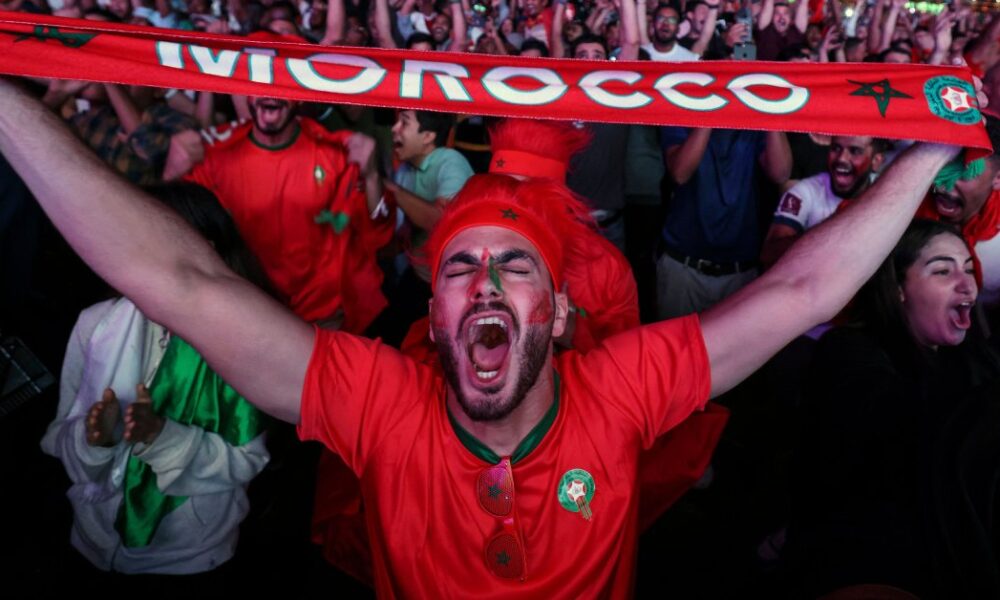
 Dima Maghrib — Always Morocco. The Athletic meets a fan culture that treats the stands as seriously as the pitch.
 The Athletic, the global sports journalism platform owned by The New York Times Group, has turned its lens on Moroccan football culture ahead of the 2026 World Cup — and what it finds is a nation that has quietly, decisively, stopped thinking of itself as an underdog.
The battle cry is Dima Maghrib — Always Morocco. Two words that have travelled from the streets of Casablanca to the stadiums of Qatar, from the open-top bus that carried the Atlas Lions through Rabat in 2022 to the terraces of an AFCON triumph. This summer, The Athletic reports, they will echo through American stadiums with a force that opposing fans are only beginning to anticipate.
The Twelfth Player
At the heart of The Athletic’s portrait is RossoVerde, a Moroccan fan group whose very name — Italian for red and green — signals the seriousness of its ambition. Its members do not simply attend matches. They prepare for them weeks in advance, coordinating chants, visual displays, musical sections and logistics with a discipline that mirrors the professionalism they demand from the players on the pitch.
The outlet captures a fan culture rooted in something deeper than tournament cycles. Morocco’s club football scene — anchored by the fierce Casablanca rivalry between Raja and Wydad — has long produced some of the most passionate terraces in Africa. The national team, The Athletic argues, has learned to harness that energy and direct it outward, toward the world.
What emerged from Qatar 2022 was not just a historic semi-final. It was a psychological rupture. A generation of Moroccan fans discovered, in real time, that the ceiling they had assumed was permanent was in fact moveable.
A Nation That Has Learned to Dream Out Loud
The Athletic’s most resonant finding is not tactical. It is emotional. Morocco enters the 2026 World Cup ranked eighth globally — ahead of football powers that once seemed unreachable — and as reigning AFCON champions. The confidence The Athletic documents among supporters is not borrowed from past glory. It is built on lived experience and a genuine belief that the squad heading to North America is capable of going further still.
The outlet captures fans who speak not of participation but of purpose — who travel not to witness history but to make it, who understand their role in the stands as an extension of the team’s effort on the pitch. That relationship between players and supporters, The Athletic suggests, is one of Morocco’s most underestimated competitive advantages.
Morocco has been drawn alongside Brazil, Scotland and Haiti — a group that guarantees nothing and demands everything. Its fans, The Athletic makes clear, would not have it any other way.
Dima Maghrib. Always Morocco. The Athletic heard the battle cry. The world will hear it this summer.
- Source: The Athletic / The New York Times Group