





 A 22-year-old legal promise, three operational shelters, and millions of women still waiting.
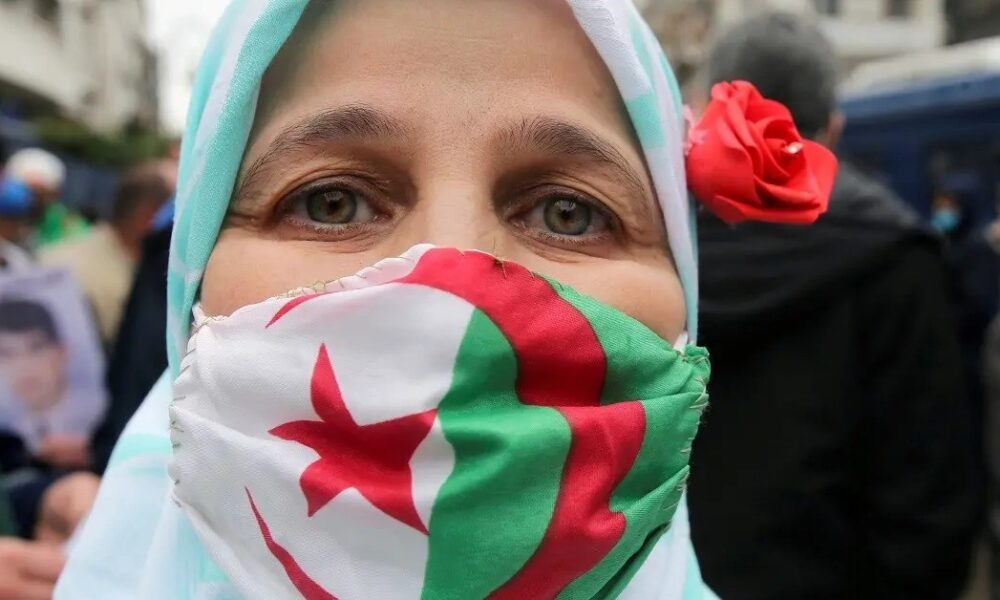
 Twenty-two years after Algeria committed by law to establish a nationwide system of shelters for women fleeing violence, only three have formally opened — all in the country’s north — leaving survivors across a nation of more than 48 million people without sufficient access to protection, Amnesty International said on Thursday. The organisation documented exclusionary admission criteria, restrictions on freedom of movement, and forced separation of mothers from their children as further barriers facing those who do reach a shelter.
Table Of Content
Executive Decree No. 04-182, introduced in June 2004, calls for the establishment of national shelters providing temporary housing and medical, social, and psychological care to women subjected to violence, as well as legal assistance. Despite that commitment, only three shelters are operational — in Tipaza, Mostaganem, and Annaba. Combined, they can accommodate around 220 people, according to interviews Amnesty conducted with representatives of women’s rights associations. UN guidelines recommend one centre per 10,000 inhabitants.
“More than two decades after Algerian authorities committed to confront the scourge of violence against women and girls, access to shelters remains woefully inadequate and unequal. Women in the centre and south of the country are forced to travel vast distances to reach a shelter — a prohibitive barrier in a country stretching over 2,000 km from north to south”. — Diana Eltahawy, Deputy Regional Director for MENA, Amnesty International
Barriers at the door
Admission to the government shelters requires a decision by the relevant provincial governor or their representative — a centralised approach Amnesty says may hinder rapid access to protection, particularly in emergencies. Under Decree 15-212 of August 2015, shelters may admit women aged between 19 and 65 for a renewable one-year period, provided they present a medical certificate, two photographs, and a copy of an identity document. Women without identification may be admitted for only four days, subject to a “social investigation”.
These requirements exclude many women who need protection most — victims of domestic violence, older women, undocumented migrants, and young women and children under 19. The decree’s requirement that admitted women be in a “situation of distress” and subject to assessment of their “disorders” raises further concerns, Amnesty said, and must be amended to align with international standards.
Restrictions inside the shelters
Interviews conducted by Amnesty between January 20, 2024 and February 10, 2025 with women’s rights defenders and others with knowledge of conditions inside the shelters indicate that women face restrictions on their freedom of movement and access to external communication. Women are also not permitted to bring their children to live with them, leading to family separation that exacerbates their precarious situation and may deter them from seeking shelter — or prompt those already there to return to abusive environments.
“According to Algeria’s international obligations and its own constitution, the authorities must ensure that shelters for victims of gender-based violence are fully accessible, free from discrimination, unnecessary entry requirements or restrictions, and that women are able to seek refuge without separating from their children”, said Eltahawy.
Information gaps
Survivors — particularly those in remote areas or with limited internet access — face significant difficulties obtaining information about how to reach shelters or access other support services. In February 2025, the Algerian government announced several measures, including a 24-hour helpline, an interactive online platform, and a legal guide outlining victims’ rights. Women’s rights groups welcomed the steps but noted that many women remain unaware of them.
The authorities have also refused to share basic data about the shelters — including capacity, number of beneficiaries, and allocated budgets — with civil society organisations. The Ministry of National Solidarity, Family, and Women’s Affairs did not respond to a March 2025 request for a meeting with Amnesty International, despite several follow-ups, and refused to authorise a visit to the Bou Ismaïl centre west of Algiers, stating that NGOs were not granted access to such facilities.
The data that exists
Algeria does not publish comprehensive official statistics on gender-based violence. According to the General Directorate of National Security, approximately 7,500 complaints of violence against women were recorded in 2024 — a 12.4% increase compared to 2023. Medical data from the National Public Health Institute recorded 4,004 cases of women survivors of physical or sexual violence in medico-legal and emergency services across five pilot provinces in 2023. There are no official statistics on femicides; the activist group Féminicides Algérie documented at least 37 in 2025.
Algeria’s international obligations
Algeria ratified CEDAW in 1996 and the Maputo Protocol in 2004. In August 2025, Algeria lifted reservations on Article 15(4) of CEDAW relating to freedom of movement and residence, but maintains reservations regarding Articles 2, 16, and 29, concerning provisions deemed to conflict with the Algerian Family Code. The legal provisions on gender-based and sexual violence in Algeria’s Penal Code remain insufficient and out of line with international standards; marital rape is not a criminal offence.