




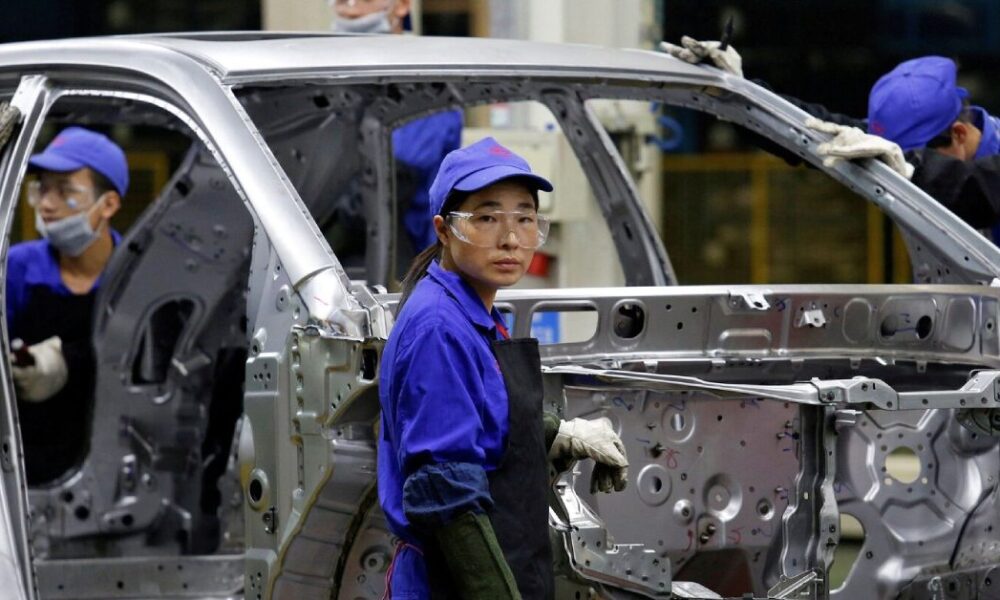
 The FT came to Tangier looking for a threat. What it found was Morocco building its industrial future — on its own terms.
 A sweeping investigation by the Financial Times reveals how Morocco has become the epicentre of one of global trade’s most watched tensions — with China pouring billions into Moroccan industrial zones and Brussels growing uneasy about what is being built, and for whom. Yet the picture that emerges from the British newspaper’s own reporting is one of a kingdom that knows exactly what it is doing.
The numbers speak for themselves. Some $6bn in Chinese investment has been announced across Morocco since the pandemic. Inside Tangier’s Mohammed VI Tanger Tech City, tyre plants are operational, battery component factories are rising, and a $1.3bn gigafactory is under construction further down the coast. EU trade commissioner Maroš Šefčovič told the FT the scale of the phenomenon was becoming “a big, big issue for the European economy”.
Morocco’s Case: Strategy, Not Coincidence
Rabat’s position, as the FT itself acknowledges, is confident and coherent. Morocco offers what few investment destinations can match: preferential access to 2.5 billion consumers through 50 free trade agreements, competitive green energy, strict local labour requirements, and an automotive ecosystem already anchored by Renault and Stellantis. The kingdom’s trade minister has set a target of a complete electric vehicle value chain serving 500,000 vehicles annually by end of 2026.
Moroccan officials are equally firm on the rules. Investors are reminded at every turn to comply with EU rules of origin. The Chinese footprint around industrial sites remains deliberately light — a direct result of Morocco’s own labour requirements. “We think Morocco can be one of the best partners for Europe in this. It will be a win-win situation”, the country’s investment agency told the FT — a framing the newspaper does not challenge.
What Brussels Is Watching
The FT does surface European concern. An existing EU ruling on Moroccan aluminium wheels found traces of Chinese subsidies, raising questions about the boundaries between collaboration and circumvention. The deeper worry in Brussels, analysts told the newspaper, centres on China’s potential to control an entire vertical supply chain — from Morocco’s vast phosphate reserves critical to battery production, through factories and logistics, to the ports themselves.
The coming test, the FT notes, is whether the EU’s proposed Industrial Accelerator Act will treat Morocco as a sufficiently European partner — a classification that would validate what Rabat has long argued: that Morocco is not a backdoor, but a bridge.
In a village outside Tanger Tech, a young Moroccan waiter at a Chinese noodle restaurant offered the FT the simplest verdict of all: “The park brings jobs to Morocco”. Brussels may frame it as a risk. Morocco is delivering results.
- Source: Financial Times