






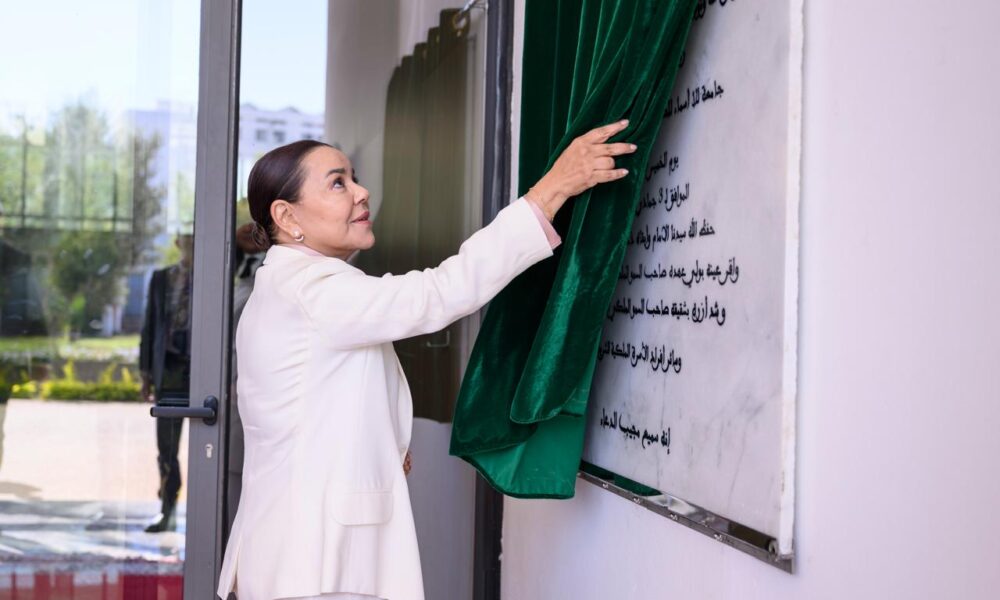
Princess Lalla Asmaa inaugurated Lalla Asmaa University in Rabat on Thursday, October 15. The institution aims to bring deaf, hard-of-hearing and hearing students together through inclusive higher education.
Table Of Content
The Princess, who chairs the Lalla Asmaa Foundation, inaugurated the university as part of Morocco’s efforts to advance scientific research, healthcare and social inclusion.
According to a statement from the foundation, the university offers free studies in hearing sciences. It brings together medical care, sign language, technology and professional training under one roof.
Lalla Asmaa University Offers Free Education
The university has four schools offering 16 diplomas, from vocational qualifications to master’s degrees. It plans to provide 3,500 places for students.
Its programmes cover hearing sciences, speech therapy, clinical psychology, sign language interpretation, artificial intelligence and digital design. Students can also train in cooking, pastry-making, chocolate-making and other professional fields.
The university will also offer specialized training in cochlear implants for ear, nose and throat surgeons. Meanwhile, its sign language programmes aim to prepare interpreters, specialist teachers and media professionals.
A student residence will open in 2027. It will welcome students from across Morocco and abroad.
International Partnerships Support Research
During the inauguration, the foundation signed five cooperation agreements with international and national partners. The agreements aim to strengthen the university’s teaching, research and clinical training.
Partners include a specialist hospital institute in Paris, the University of Montpellier, institutions in Leuven and Brussels, Mohammed V University in Rabat, and Morocco’s National Broadcasting and Television Company (SNRT).
The Paris partnership will support research into hearing loss, including genetic research and gene therapy. It will also provide expertise in hearing care for children and adults.
The Montpellier partnership focuses on training in hearing devices and cochlear implants. Meanwhile, the Belgian partnership will support clinical care and the training of hearing specialists.
Mohammed V University will promote joint research and academic cooperation. SNRT will help train sign language interpreters and develop more accessible television and radio programmes.
The foundation also signed a separate agreement with an American academic institution in Chicago several weeks earlier. This partnership will support training and research in applied behavior analysis.
Seven Labs Focus on Technology and Inclusion
Lalla Asmaa University houses seven laboratories dedicated to research, treatment and innovation.
The facilities include an innovation lab for artificial intelligence and robotics, a digital lab for software and app development, and a motion-capture studio. The latter will help researchers record Moroccan Sign Language and develop educational materials.
Other laboratories will support cochlear implant training, hearing tests and applied behavior analysis. An inclusion lab will also help students develop communication, social and business skills.
Together, these facilities aim to connect academic learning with practical skills and future employment.
Preparing for a More Inclusive Morocco
The university also aims to help public services and businesses better serve deaf and hard-of-hearing people. According to the foundation, staff from a bank, a hotel and a stadium linked to the 2030 FIFA World Cup will receive training to improve communication and accessibility.
Morocco will co-host the tournament with Spain and Portugal. The university aims to help prepare interpreters and reception staff to welcome visitors with different hearing needs.
During her visit, Princess Lalla Asmaa toured the university’s laboratories and training workshops. She also met members of the teaching staff.
The foundation’s executive president, Karim Skalli, said the institution marked a shift from providing care to training the professionals who will deliver it. The university aims to bring deaf and hearing students together in the same classrooms, making inclusion a shared practice.
- Source: MAP