






 Strikes and negotiations, simultaneously — Washington's approach to the Iran ceasefire in one sentence.
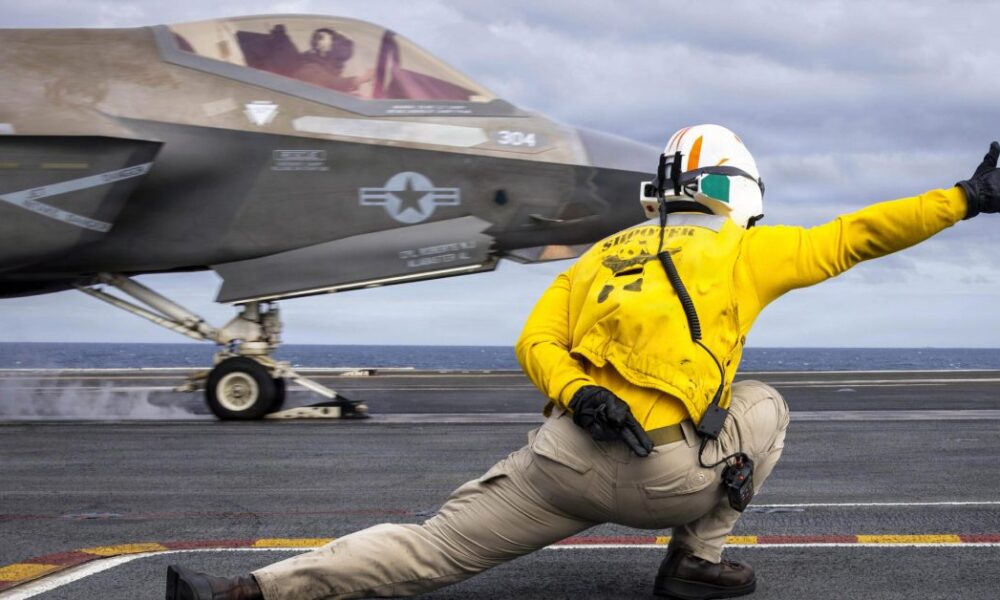
 The United States military carried out strikes in southern Iran on Monday, targeting missile launch sites and boats engaged in mine-laying operations, even as President Donald Trump announced on social media that negotiations with Tehran were “proceeding nicely”. The strikes were conducted “to protect our troops from threats posed by Iranian forces”, said Captain Tim Hawkins, spokesman for US Central Command, adding that the military was “using restraint during the ongoing ceasefire”.
No official response came from Tehran, whose parliament speaker Mohammad Bagher Qalibaf was in Qatar for talks on a potential deal with Washington. Qatar — which itself faced Iranian drone and missile strikes during the war — holds billions of dollars in frozen Iranian funds, making it a critical intermediary. The Iranian news website Tabnak, believed to be close to former Revolutionary Guard chief Mohsen Rezaei, reported four Guard troops killed in strikes on boats. Iranian state television separately reported explosions near Bandar Abbas, a city on the Strait of Hormuz home to a military port and a dual-use airport.
“To protect our troops from threats posed by Iranian forces” — while “using restraint during the ongoing ceasefire”.
— Captain Tim Hawkins, spokesman · US Central Command · 26 May 2026
The Strait of Hormuz, through which a fifth of all crude oil and natural gas once flowed freely, remains effectively under Iranian control, continuing to disrupt global energy markets.
Trump adds Abraham Accords to the equation
The strikes came as Trump introduced a new and potentially complicating demand into the Iran negotiations: that any peace agreement should require Saudi Arabia, Pakistan and other Muslim-majority countries to join the Abraham Accords — the US-brokered normalisation agreements from his first term. He called it “mandatory” that most countries on his list sign on “simultaneously”, while allowing for “one or two” holdouts.
The proposal landed with immediate friction. Saudi Arabia has long conditioned any normalisation with Israel on the creation of a Palestinian state with East Jerusalem as its capital — a position unchanged by the war. Pakistan, a key mediator in the Iran talks, similarly has no diplomatic relations with Israel. Islamabad-based analyst Syed Mohammad Ali said Pakistan’s position “remains unchanged”. Former Pakistani ambassador Masood Khan noted that invoking the Abraham Accords “gives an altogether new dimension to the diplomatic and mediatory processes because this issue was not on the agenda”.
Egypt, Jordan and Turkey already recognise Israel. Morocco, Sudan and, more recently, Kazakhstan have also joined the Accords. Trump suggested even Iran could eventually sign on, if a deal is reached.
- Souarce: AP